Fifa recently reversed its controversial plan to sell a minority stake in the World Cup, following fierce opposition and threats of boycotts. The proposed deal, which would have seen a group of tech investors led by Thrive Eternal inject an initial $4.2 billion (£3.1 billion) into the global football spectacle, highlighted a growing trend: the belief that traditional sports are uniquely resilient in an era increasingly dominated by artificial intelligence.
At the heart of the now-canned proposal was Thrive Eternal, a spin-off of the venture capital firm Thrive Capital, known for its significant financial backing of OpenAI. Run by Joshua Kushner, Thrive Eternal was established in April this year with a distinct investment philosophy: to target areas possessing ‘qualities that cannot be replicated by technology.’ The firm’s executives view sport not merely as surviving the AI revolution but as growing significantly in value. This conviction stems from the belief that football’s deep-rooted tradition, cultural significance, and identity aspects will shield it from the disruptive forces of AI, unlike other entertainment sectors such as movies and music, which are already experiencing technology-driven human replacement.
The proposed Forward Enterprise (FFE) structure, valued at $20 billion, aimed to secure a minority stake for investors in the World Cup. A source close to Thrive Eternal indicated that the investment was not structured for a ‘speedy return,’ but rather for a ‘long period of time – decades,’ reflecting the firm’s holding company structure and long-term vision. Under the FFE proposal, each of Fifa’s member associations stood to gain equity worth as much as $91 million. The equity, crucially, would have remained under Fifa’s control, with any sale requiring approval from individual member associations. Fifa’s stated objective for FFE was ‘to separate the business of football from the governance of the sport,’ while the investor’s perspective was to ‘channel more resources upfront to countries that wouldn’t typically get access to outside funding – so they could invest in things like stadiums and training to be able to develop their game domestically.’
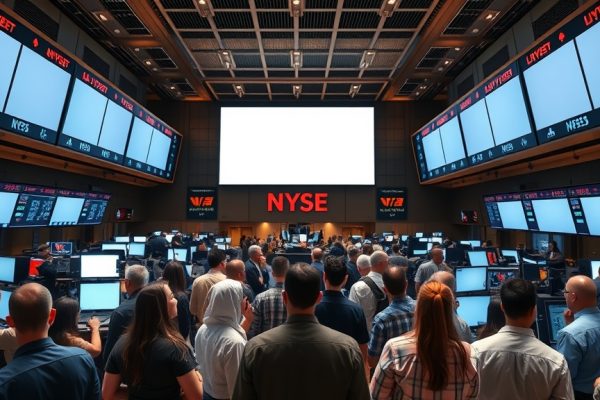
Professor Simon Chadwick, a veteran of the global sports industry with 30 years of experience, observed that commercialisation and investment interests increasingly lead to decisions being made for football ‘in Wall Street and Silicon Valley.’ He told the BBC, ‘It is almost as though it’s crept up on us and a lot of people haven’t really thought about what’s happening.’ Despite the governance questions raised for Fifa, Chadwick acknowledged the broader trend: ‘Whether people like it or not, private equity investment in sport is happening.’ This is not an entirely new phenomenon; US investment in football has been on an upward trajectory for over two decades, notably since the Glazer family acquired Manchester United.
However, questions arose regarding Fifa’s actual need for such a substantial cash injection. While Fifa has contended that the World Cup is ‘under-monetised,’ the 2026 edition, co-hosted by the US, Canada, and Mexico, is already projected to generate record revenues. This is attributed to factors such as hydration break adverts, dynamic ticket pricing, and record broadcast and sponsorship rights. The expansion to a 48-team tournament, with potential for a 64-team format, further underscores significant commercial opportunities. Christina Philippou, an associate professor in accounting and sport finance at the University of Portsmouth, explicitly stated that ‘Fifa are not in a position where they are desperate for money. In fact, they could very easily, with the money they already have, increase those payouts to the member associations. So there is no need to go external.’
Thrive Eternal’s interest in sports extends beyond football. As part of its launch, the firm announced an agreement to acquire a stake in the San Francisco Giants baseball team and is reportedly considering a bid for a new NBA franchise in Las Vegas. The firm’s website articulates its strategy, stating that ‘iconic franchises and cultural institutions rooted in tradition, identity, and shared experience’ will not only endure the AI revolution but ‘will matter even more.’ To bolster its sports investment arm, Thrive Eternal also brought in high-profile advisors, including Greg Maffei, former boss of Formula 1 owner Liberty Media, and former Disney chief executive Bob Iger.
While Thrive Eternal has respected Fifa’s decision to withdraw the FFE plan, the underlying investment thesis—that certain sports assets are uniquely positioned to thrive in an an AI-driven future—remains firmly in place. The episode underscores the increasing convergence of technology investment and global sports, signaling that even as specific deals falter, the pursuit of ‘AI-proof’ cultural institutions by sophisticated financial players is likely to continue, shaping the future commercial landscape of professional athletics.