President Donald Trump is set to engage with key US partners from the Middle East on the sidelines of the upcoming Group of Seven (G7) leaders’ summit in France, highlighting the persistent and significant role the conflict in Iran plays amidst European allies grappling with global economic repercussions. The summit, scheduled for June 15 to June 17 at Évian-les-Bains, will see Trump hold a series of bilateral meetings, extending beyond the traditional G7 framework and signaling a focused approach to regional security and economic stability.
nn
Strategic Bilateral Engagements Beyond G7
n
Senior administration officials, who briefed reporters anonymously on the trip, confirmed that President Trump will conduct bilateral meetings with the leaders of France, Qatar, the United Arab Emirates, Egypt, and India. The inclusion of Qatar, UAE, and Egypt, all crucial US partners in the Middle East, alongside India, a significant global economic player, underscores a strategic outreach beyond the core G7 membership. These nations are not part of the G7, which comprises the US, France, Germany, the UK, Canada, Italy, and Japan, plus the European Union. These engagements occur as the US and Iran reportedly near a critical agreement to reopen the Strait of Hormuz, a development that could materialize with a signing as early as Sunday on the summit’s periphery.
n
The Trump administration views this potential agreement as a “strong deal,” according to one US official. This official also indicated that once the agreement with Iran progresses, numerous actions could be undertaken by other G7 member nations to support its implementation and broader regional stability, potentially unlocking new avenues for international cooperation and economic recovery.
nn
Iran Tensions and Global Economic Fallout
n
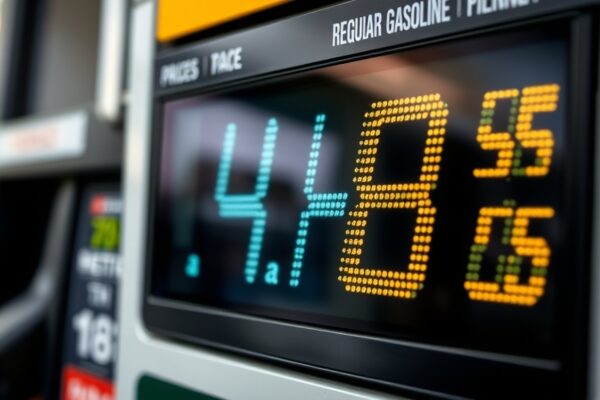
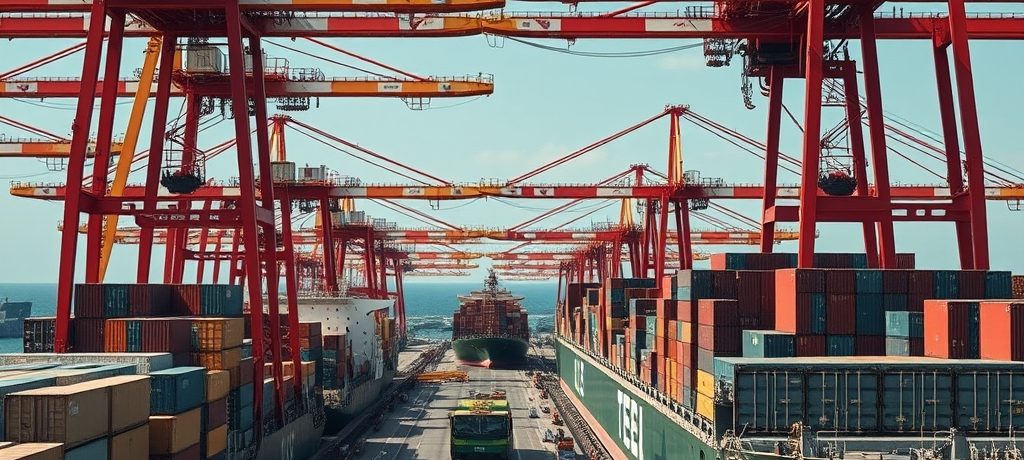
The “war in Iran” has been identified as a primary driver of global economic instability, particularly through its profound impact on energy markets. The closure of the Strait of Hormuz by Iran, a vital international waterway for approximately one-fifth of the world’s oil and a significant portion of its liquefied natural gas shipments, triggered a severe global energy shock. This disruption roiled financial markets worldwide, led to a sharp spike in gasoline prices across many nations, and intensified fears regarding its broader impact on global economic growth and supply chain resilience. President Trump has openly criticized European allies, accusing them of insufficient action to facilitate the reopening of the strait. In a notable escalation of rhetoric, he has even reiterated the possibility of the US withdrawing from the North Atlantic Treaty Organization (NATO) over these perceived shortcomings, adding another layer of geopolitical tension to the summit.
n
Concerns have also been raised about the potential for the US to scale back some of its defense commitments in Europe, including reductions in the number of aircraft and warships deployed as part of the NATO alliance. In response to these concerns, officials stated their satisfaction with some of the “burden-shifting” observed among European countries, while simultaneously expressing a desire for further contributions from allies to shared defense responsibilities.
nn
Summit Agenda and Economic Priorities
n
Beyond the immediate focus on Iran, President Trump’s agenda for the G7 summit is expected to encompass a range of critical economic and security priorities. These include fostering economic development and security, enhancing supply chain resilience in an increasingly interconnected world, advancing artificial intelligence capabilities, promoting regulatory streamlining to boost commerce, and pursuing the overarching goal of energy abundance. The G7 gathering itself, bringing together the leaders of the US, France, Germany, the UK, Canada, Italy, and Japan, along with the European Union, is slated to address trade broadly, including complex relations with China, critical minerals sourcing, artificial intelligence, and Russia’s ongoing conflict in Ukraine.
n
Despite the comprehensive agenda and the pressing need for global economic coordination, US officials tempered expectations regarding immediate trade breakthroughs. Reporters were informed on Saturday that no significant trade-related agreements were anticipated with either Canada or India during the summit proceedings, suggesting that some of the more contentious trade issues might require further, more protracted negotiations.
n
Adding to the economic strains, President Trump is also pushing ahead with efforts to rebuild his tariff wall following a court setback earlier this year. This move is expected to further strain economic ties and fuel uncertainty for major trading partners that already have existing deals with the US, potentially complicating efforts to forge a united front on global trade policy at the G7.
nn
European Priorities and Geopolitical Strains
n
The summit unfolds against a backdrop of increasing tensions between the US and many of its principal economic and security partners. European leaders, in particular, are keen to leverage the three-day event to de-escalate these strains and advocate for President Trump’s support for new peace negotiations between Russia and Ukraine. The UK, France, and Germany are collectively pushing for Russia to agree to an immediate ceasefire, proposing the current front lines as the “starting point for negotiations” and advocating for robust security guarantees for Ukraine. This unified European stance highlights a desire to address pressing geopolitical conflicts while simultaneously navigating complex transatlantic relationships.
n
The convergence of these diverse agendas—from the immediate economic implications of the Strait of Hormuz and the potential Iran agreement to broader geopolitical realignments, defense commitments, and persistent trade disputes—underscores the complex diplomatic tightrope President Trump and his counterparts will walk at Évian-les-Bains. The outcomes, particularly concerning the Iran agreement and the unity among G7 nations on global challenges, will be closely watched by financial markets and international observers alike, offering insights into the future direction of global economic and security cooperation.