The United Arab Emirates significantly escalated its crude oil production in June, reaching an all-time high of 4.1 million barrels a day (bpd), according to the International Energy Agency (IEA). This robust increase, detailed in the IEA’s monthly report, represents Abu Dhabi’s assertive and notably bolder response to the market disruptions stemming from the Iran war, distinguishing its strategy from other Persian Gulf producers.
Record Output Driven by Strategic Shift
The IEA’s data confirms that the UAE’s average daily output in June surpassed its previous peak of 4 million bpd, which was set in 2020 during a brief price war with Saudi Arabia over OPEC+ policy. This latest surge in production, marking a new national record, underscores a deliberate and strategic pivot. It follows the UAE’s departure from the Organization of the Petroleum Exporting Countries (OPEC) at the end of April. This exit was explicitly aimed at enabling the country to pursue its expansion plans unfettered by the group’s output restrictions, a strategic move that has now manifested in unprecedented production levels and a clear signal of its independent energy policy.
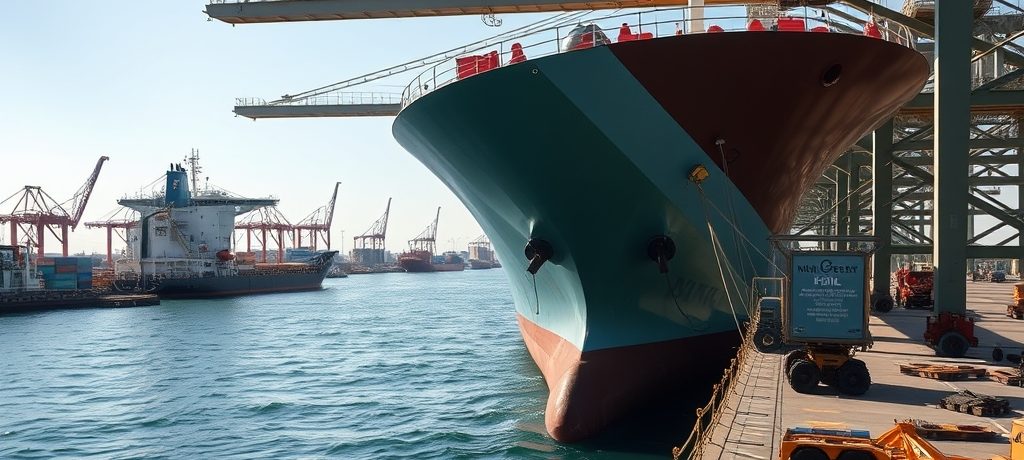
Abu Dhabi’s tactics since the onset of the Iran war have become increasingly apparent and aggressive. The nation has not only leveraged its own substantial fleet of oil tankers but has also engaged additional vessels controlled by Sinokor Group, a prominent South Korean firm recognized for operating what is described as the world’s largest fleet of oil supertankers. A critical and perhaps most audacious aspect of these operations involves many of these vessels running ‘dark,’ with their digital transponders intentionally turned off. This practice is employed to facilitate the unseen transport of barrels out of the Persian Gulf, a measure highlighting the urgency and determination behind the UAE’s efforts to maintain supply flows.
Market Reversal Amid Geopolitical Tensions
The vigorous recovery in crude flows from the Persian Gulf, largely occurring before a recent spate of attacks on commercial shipping in the Strait of Hormuz, played a pivotal role in shifting global markets. This increased supply, combined with a precarious peace agreement that had been established between Washington and Tehran, transitioned world markets from a state of perceived tightness to exhibiting clear signs of oversupply in key regions. Consequently, the substantial war-time rally in crude prices was largely erased. Brent futures, for instance, which had topped $80 a barrel earlier in the week, eased significantly to below $76 a barrel by Friday, reflecting the market’s response to the influx of new supply.
However, the stability of this recovery was abruptly complicated on Wednesday when President Donald Trump declared the ceasefire effectively void. This declaration followed renewed hostilities in the Persian Gulf, which included US forces striking sites in Iran for two consecutive days. In a retaliatory move, Tehran subsequently fired upon Bahrain and Kuwait. These escalating developments underscore the highly volatile geopolitical backdrop against which the UAE’s record production surge has occurred, introducing renewed uncertainty into the global oil market despite increased supply.
Regional Production Landscape and Refinery Lag
While the UAE demonstrated an unprecedented boost in its crude output, other major producers in the Gulf also increased their production in June, though they generally fell short of their pre-war levels, according to the IEA. Saudi Arabia, for instance, pumped 7.3 million bpd in June, marking a significant increase of 900,000 bpd from the preceding month. Kuwait’s production rose to an average of 1.4 million bpd, and Iraq’s output reached 2 million bpd. These figures, while showing increases, highlight the UAE’s distinct and more aggressive approach to supply expansion, particularly in achieving an all-time high, differentiating its strategy from its regional counterparts who have not yet fully restored pre-conflict output.
Despite the significant rise in crude flows from the Gulf, refinery activity in the region has been notably more sluggish in its response. The IEA reported that product exports from Gulf refineries remain less than half the levels observed prior to the conflict. This indicates a potential bottleneck or a slower ramp-up in downstream processing capabilities compared to the rapid increase in upstream crude extraction. The disparity suggests that while raw crude supply is abundant, the conversion into refined products for end-users has not kept pace, potentially impacting product markets differently than crude markets.
The UAE’s record oil output in June, as reported by the IEA, stands as a clear indicator of its strategic autonomy post-OPEC exit and its proactive, even audacious, stance in addressing global supply dynamics amidst regional conflict. This bold move has demonstrably reshaped market expectations, contributing to a softening of crude prices, even as the broader geopolitical landscape in the Persian Gulf remains fraught with tension and uncertainty, posing ongoing challenges to energy security and stability.