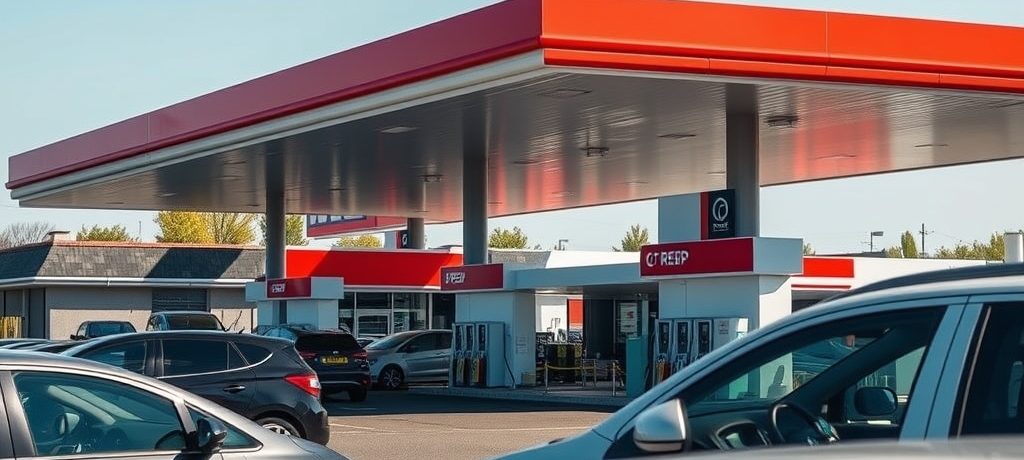
The UK’s inflation rate accelerated to 3.5% in the year to September, up from 3.1%, marking its quickest pace since October 2025. This notable increase, primarily driven by surging petrol and diesel prices, intensifies the fiscal challenges facing Chancellor John Healey just a week before he delivers his first Budget.
Fuel Prices Drive Inflationary Surge
According to the Office for National Statistics (ONS), the September inflation figure represents the highest rate in almost a year. ONS chief economist Grant Fitzner highlighted the ‘notable’ increase, attributing a significant portion to the sharp rise in motor fuel costs. Petrol prices, specifically, increased by 8.2p per litre between August and September, reaching an average of 169.5p per litre. Diesel prices also rocketed to 192.5p per litre, with overall motor fuel prices rising by 29.8% in the period covered by the figures. These petrol prices are the highest recorded since August 2022.
Global Conflicts Squeeze Oil Supplies
The escalation in fuel prices is directly linked to ongoing conflicts in the Middle East and Europe, which continue to exert pressure on global oil supplies. The ONS noted that the effective closure of the Strait of Hormuz by Iran, following US and Israeli attacks, has severely disrupted a major global supply line for crude oil. Concurrently, oil refining capacity worldwide has been hampered by Russian and Ukrainian attacks on each other’s infrastructure. Beyond motor fuels, the ONS also identified rising prices for airfares, computer games, and live events as contributing factors to the overall inflation rate.
Chancellor Faces Fiscal Headwinds Ahead of Budget
The inflation figures emerge as the UK government grapples with significant borrowing. The ONS reported that government borrowing jumped to nearly £25 billion in September, a figure £1.8 billion higher than a year earlier. This amount exceeded both analyst expectations and the spending watchdog Office for Budget Responsibility (OBR)’s forecast, with higher inflation contributing to increased debt interest costs.
Ruth Gregory, deputy chief UK economist at Capital Economics, described the borrowing figures as painting ‘a dismal picture’ ahead of Healey’s Budget. She reinforced the view that the Chancellor is likely to deliver a cautious Budget on 28 October, one that will have ‘little net impact on the economy and leaves the toughest fiscal choices for next year.’
Healey’s Strategy: Fiscal Discipline and Growth
In response to the economic climate, Chancellor John Healey acknowledged the global impact of price rises stemming from conflicts in the Middle East and Europe, stating they are ‘hitting Britain and countries worldwide.’ He highlighted the International Monetary Fund’s recent praise for the UK government’s ‘fiscal discipline’ and pointed to the recent approval for extracting more gas from the North Sea’s Jackdaw field as a measure to bolster energy security.
Healey affirmed that the upcoming Budget on 28 October aims to ‘keep up this momentum’ by adhering to the government’s self-imposed fiscal rules and driving ‘growth in every postcode, while giving businesses and families some breathing space.’
As the Chancellor prepares to unveil his fiscal plans, the persistent inflationary pressures, particularly from volatile global energy markets, coupled with the challenging borrowing landscape, underscore the delicate balancing act required to stabilise the UK economy and foster sustainable growth.