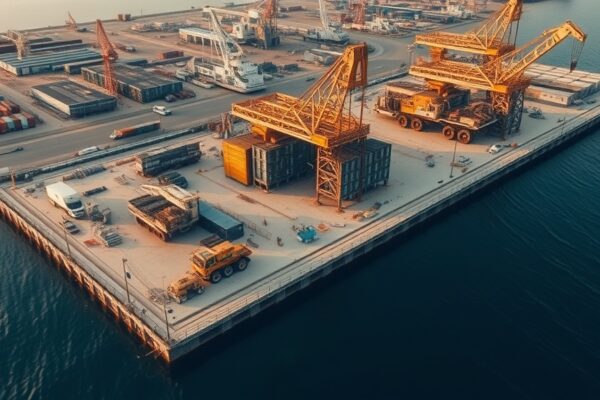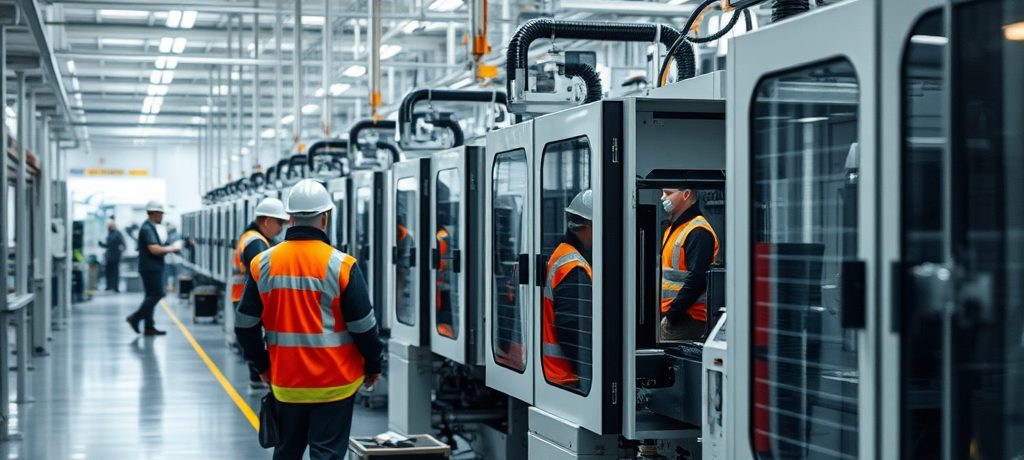
A significant influx of US capital is reshaping Germany’s traditional industrial and family-owned business landscape, with American investors increasingly targeting the nation’s famed Mittelstand. Companies like Birkenstock, Viessmann, Linde, and ebm-papst exemplify this trend, having transitioned into American ownership. Last year alone, US investors participated in 76 acquisitions and investments in German industrial and manufacturing companies, a figure reported by financial data provider PitchBook. The total value of these transactions reached approximately $29.5 billion (€26.3 billion) in 2025, nearly doubling the 2022 total. As of August 19, 2026, the cumulative figure stood at $23.9 billion.
The Enduring Appeal of German Specialization
The interest from US investors in German companies remains robust, according to Samar-Ahmad Albrecht-Mahmood of Veracity Capital Investments, a firm that advises companies on German investments. Albrecht-Mahmood explained to DW that German industrial and manufacturing firms are particularly attractive due to their high specialization, strong customer relationships, and exceptional technical know-how. He noted, “In many cases, these are businesses that have built up a strong position in their niche over decades.” This deep-rooted expertise and market entrenchment make them prime targets for international capital.
Succession Challenges Open Acquisition Opportunities
A critical factor driving these acquisitions is the growing challenge of succession within German family-owned businesses. Many owners are reaching retirement age and are contemplating selling their enterprises, often without a successor available within the family. Albrecht-Mahmood highlighted this, stating, “There is often no successor within the family.” This situation, he added, “brings companies onto the market that might not have been available for sale a few years ago.” Recent notable takeovers underscore this trend, including the acquisition of ebm-papst, a Mulfingen-based manufacturer of electric motors and fans, by US company Madison Air for $5.4 billion in August. Similarly, in June, the long-established Augsburg-based company Everllence, formerly known as MAN Energy Solutions, saw a 51% stake acquired by US investment firm Bain Capital.
Investment Volume Outpaces Deal Numbers
The United States now holds ownership of more German firms than any other country, according to Die Deutsche Wirtschaft (DDW), a German business information network focused on the Mittelstand. Their database, “German Companies Under Foreign Ownership,” identifies 1,750 firms currently held by US investors out of a total of 7,861. PricewaterhouseCoopers (PwC) corroborated the growing US investor interest in its report, “Destination Germany.” PwC’s analysis indicated that while the sheer number of acquisitions and equity investments has not necessarily increased, the financial volume of these deals has seen a significant jump. A prime example cited was the acquisition of BASF Coatings by US investment firm Carlyle, in partnership with the Qatar Investment Authority (QIA), for approximately €7.7 billion. This deal was struck on October 26, 2025, and finalized on June 30 of the current year.
A Nuanced View of Capital Flows and Future Outlook
Despite the clear trend of increasing acquisition values, the broader picture of US investment flows into Germany presents a more nuanced view. Data from the Bundesbank shows a decline in US direct investment in Germany last year, amounting to only €11.8 billion in 2025, nearly 44% less than in 2024. This contrasts with an overall rise in foreign direct investment in Germany, which grew from €57.4 billion in 2024 to €86.1 billion last year, with investment from the United Kingdom, for instance, rising to around €26 billion. However, Albrecht-Mahmood maintains that the underlying trend of interest in German industrial companies, particularly strong Mittelstand businesses, remains high, even if not reflected in consistently higher deal numbers every year. He also pointed to relatively low valuations as a key driver, noting, “Compared to the US, we still see situations where German companies are valued more moderately, particularly in the SME segment. This can make acquisitions quite attractive for international buyers.” Looking ahead, a recent survey by the American Chamber of Commerce in Germany indicates optimism, with about 62% of US companies active in the country expecting business conditions to improve over the next three to four years. Furthermore, 52% of these companies plan to expand their operations in Germany, an increase from 49% in 2024.
The strategic appeal of Germany’s specialized Mittelstand, combined with the pressing issue of business succession and attractive valuations, continues to draw substantial US investment. While overall capital flow figures may fluctuate, the fundamental drivers for these targeted acquisitions suggest a sustained appetite for Germany’s industrial heartland among American investors.