Argentina’s corporate borrowers are embarking on a significant strategic pivot, turning to global debt markets not merely to mend strained balance sheets, but to aggressively fund an energy-driven expansion. This marks a distinct departure from the crisis-driven financing prevalent in previous years, signaling a renewed focus on growth and long-term development.
Massive Investment Targets Vaca Muerta
According to estimates from Goldman Sachs, the scale of this ambition is substantial, with investment in Argentina’s energy and related infrastructure projected to reach an impressive $60 billion over the next five years. The vast majority of this capital, as indicated by bankers at Wall Street’s main firms, will need to be sourced from abroad, signaling a period of strong momentum for Argentine foreign bond sales.
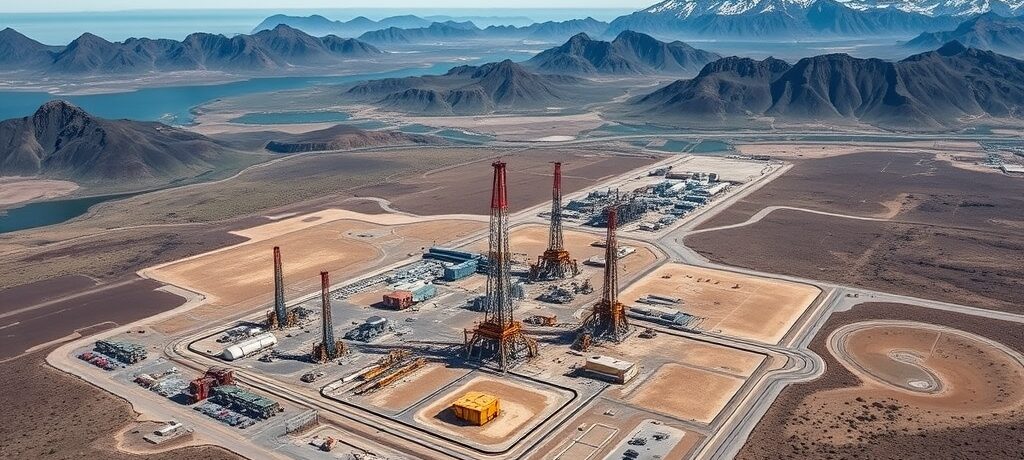
The epicenter of this investment is the Vaca Muerta oil and gas field, a colossal resource spanning approximately 30,000 square kilometers in Patagonia. Lisandro Miguens, head of Latin America Debt Capital Markets at JPMorgan, articulated this fundamental shift, stating, ‘We are entering a strong, capital-intensive investment cycle to develop Vaca Muerta, the surrounding infrastructure, and mining and power.’ He further clarified the financial implications: ‘This will lead to primary market issuance to finance capex rather than refinancing maturities,’ emphasizing a focus on growth capital over debt restructuring.
Strategic Importance and Economic Impact
The strategic importance of Vaca Muerta is underscored by its immense reserves and ambitious production targets. Current output from the field stands at approximately 600,000 barrels of oil per day. However, industry players are targeting a significant increase, aiming for production of more than 1 million barrels per day by 2030, a goal contingent upon the robust development of surrounding infrastructure. This basin is globally recognized for holding the world’s fourth-largest shale oil reserves and its second-largest shale gas reserves, making its full exploitation a national priority.
President Javier Milei’s administration has placed Vaca Muerta, alongside a nascent mining sector, at the core of its strategy to boost foreign earnings. Government projections indicate a dramatic increase in energy exports, from $11.1 billion last year to a projected $36.7 billion by the end of the decade—a nearly threefold expansion. This anticipated surge is directly linked to new pipelines and export terminals coming online. Already, the rising energy shipments from Vaca Muerta, coupled with a recent wave of dollar borrowing by local companies, are contributing to the improved performance of the country’s often-battered currency.
Market Activity and Key Projects
The shift in financing objectives is already translating into tangible market activity. Argentine companies issued $2.1 billion of dollar bonds in the first three months of 2026. While this figure might appear modest by global standards, it represents the busiest first quarter for local companies since 2017, highlighting a renewed confidence and appetite for growth-oriented capital. This recent flurry of deals contrasts sharply with the previous year, when market activity was largely dominated by companies seeking to rollover existing debt maturities.
Several major infrastructure projects are either announced or in advanced stages of planning, illustrating the capital-intensive nature of this energy boom. Gas transporter TGS, for example, announced substantial plans last month, committing $3 billion towards infrastructure investments. Furthermore, JPMorgan is actively engaged in developing what could become Argentina’s largest project finance deal, aiming to raise approximately $14 billion for the state-owned oil company YPF SA. In parallel, JPMorgan and Citigroup are reportedly in talks to finance another significant project: a $1 billion pipeline, further demonstrating the scale of infrastructure development required.
Market Outlook and Investor Appetite
Despite recent geopolitical turbulence, particularly the war in Iran which ‘dented’ bond sales last month, market participants remain optimistic about the long-term trajectory of Argentine debt issuance. Industry experts believe that such events are unlikely to derail the broader momentum. Adrián Guzzoni, head of regional debt capital markets at Citigroup, articulated this resilience, stating, ‘The pipeline remains strong, and once the market absorbs the impact of the war and oil prices stabilize, it should still be a solid year for debt in Latin America.’ He further emphasized the robust investor interest, adding, ‘The appetite is there, and any Argentine corporate seeking financing will find the market open.’ This outlook suggests that global investors are increasingly viewing Argentina’s energy sector as a compelling opportunity, willing to provide the necessary capital for its ambitious expansion plans. The focus on developing new energy sources is seen as a key driver sustaining this interest, even amidst global uncertainties.
The shift from crisis management to growth financing represents a pivotal moment for Argentina’s economy, with global debt markets playing a crucial role in unlocking the nation’s vast energy potential. The substantial projected investments and ambitious production targets for Vaca Muerta signal a long-term commitment to transforming Argentina into a major energy exporter, supported by a receptive international financial community.