The Bank of England is attempting to navigate a complex economic landscape, acknowledging that external factors beyond Britain’s control are significantly shaping the nation’s financial outlook. In its latest meeting minutes and accompanying data, the central bank stressed that interest rate policy alone cannot resolve geopolitical crises impacting global commodity markets, particularly oil.
Managing Expectations Amidst Volatility
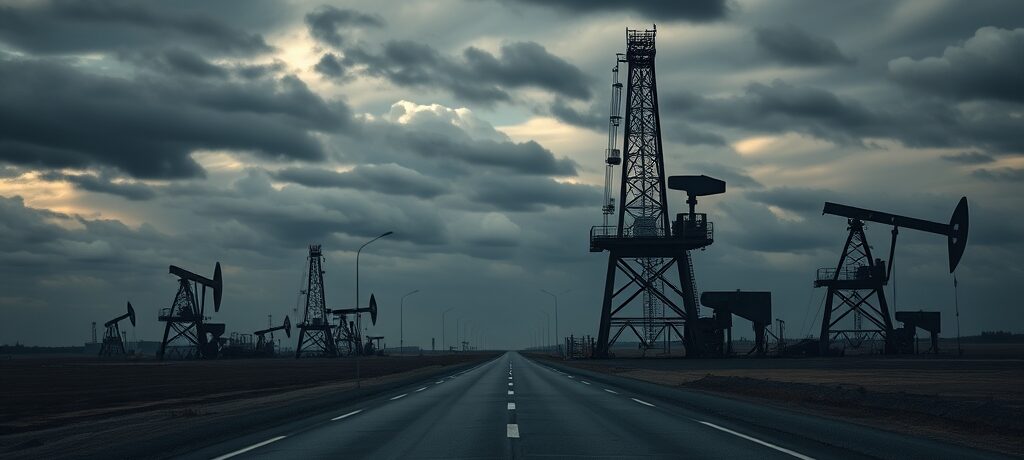
The core message from the Bank’s deliberations was clear: rate cuts are off the table for the foreseeable future. Instead, the likelihood of an interest rate rise has increased. The Bank presented scenarios where sustained oil prices at approximately $125 per barrel, as seen recently, could necessitate rates exceeding 5% this year. This detailed forecasting aims to manage public and market expectations regarding plausible outcomes should the Middle East conflict persist for several months.
The recent sharp decline in oil prices, following an initial ceasefire announcement, was predicated on the assumption of a swift return to normalcy. However, the Bank is now preparing for a more protracted period of uncertainty, providing a framework for understanding the “ifs” and “maybes” of such a scenario.
The Household Squeeze
For households already grappling with elevated costs at the petrol pumps, anticipated increases in gas and electricity prices this summer, and persistent food inflation, the prospect of significantly higher mortgage payments presents a daunting challenge. When questioned about this, Bank of England Governor Andrew Bailey acknowledged the severity of the situation.
“These are very difficult circumstances,” Bailey stated. “This is a major increase in energy prices. No question about that. It’s a very big shock in that sense and of course, it is felt by households. Inflation is bad for everybody, but it’s particularly bad for the least well off. Things like energy and food [make up] a much bigger proportion of spending by those on lower incomes and so we have to be very, very sensitive to that. So this is a difficult situation. Our job is to sort of chart the best course we can through it.”
The Governor highlighted the extreme volatility in oil prices, noting a $10 per barrel fluctuation within a single day. While a benign scenario of immediate and sustained energy price falls might avert rate rises, market sentiment is now leaning towards a June or July increase, anticipating the continuation of blockades and their impact on supply.
Market Reactions and Government Borrowing
The financial markets are not waiting for official pronouncements, with longer-term rates already climbing. This trend is directly impacting fixed-term mortgage rates, which the Bank projects could lead to an average monthly payment increase of £80 for mortgaged households. Over the next three years, more than half of households with mortgages are expected to face higher monthly outgoings as their fixed deals expire.
This situation poses a significant challenge for the government, as effective government borrowing rates are rising globally due to the crisis. The UK’s borrowing costs have exhibited greater volatility compared to some other G7 nations. When asked if the UK faced a particular problem, Governor Bailey attributed the fluctuations to the conflict itself and the discourse surrounding it, rather than a specific UK issue.
“It’s all to do with the conflict,” he explained. “It’s really been driven by both actual developments in the conflict, but also what gets said about the conflict. I think that the UK ‘premium’ is interesting. The exchange rate doesn’t move much at all. That’s one thing I look at when I’m judging: ‘Is there a particular UK story here? Is the UK somehow different to other countries?’. The exchange rate, in my experience, is actually not a bad at all guide to that, and it hasn’t moved much. It’s trading actually around the upper end of the band it’s been in since Brexit.”
While there are some indications of economic resilience in the first quarter, the focus remains on the immediate and future uncertainties. The Bank’s message is a stark reminder for households and businesses to prepare for the possibility that the current geopolitical tensions could extend for several months, with significant economic ramifications.