As the Iran war continues to simmer, trade experts are increasingly questioning whether its impact on global supply chains could prove more profound and lasting than the disruptions wrought by the COVID-19 pandemic. The shutdown of the Strait of Hormuz, a critical maritime choke point, has exposed vulnerabilities in global trade that differ in nature but could lead to a more fundamental reshaping of corporate strategies to counter future geopolitical shocks.
A Distinct Supply-Side Shock
While the COVID-19 pandemic delivered a broad demand shock and exposed the world’s heavy dependence on China for manufacturing, and US President Donald Trump’s tariffs (introduced last year) accelerated efforts to diversify, the Iran war presents an acute supply-side blow. This current crisis is concentrated specifically on energy and commodities, highlighting a critical reliance on key raw materials such as oil, gas, and fertilizers.
Sebastian Janssen, a partner at Oliver Wyman, a New York-based global management consulting firm, articulated this distinction to DW. He noted, ‘COVID exposed overdependence on a manufacturing hub, while Hormuz exposed overdependence on a transport corridor and on energy inputs.’ During the pandemic, factories idled and ports became congested, yet energy prices remained relatively stable. In contrast, the current conflict has seen the International Energy Agency describe the loss of approximately 10% of the world’s oil supply and a fifth of global liquefied natural gas last month as the largest in the history of the global energy market.
Lisa Anderson, president of LMA Consulting Group and a supply chain expert, observes that these back-to-back crises have fundamentally altered how companies assess risk. ‘COVID got companies to the point where they realized they can’t just count on supply showing up when they need it,’ Anderson told DW. ‘The Iran war shows it was not a one-off event.’
Hormuz Disruptions Drive Costs and Rerouting
The immediate fallout from the Hormuz disruptions is already palpable. The surge in oil, gas, and fertilizer prices has compelled governments to revise inflation forecasts, with the risk of wider goods trade disruptions still looming. Shipping companies have been forced into abrupt rerouting exercises, reminiscent of the 2023/24 attacks by Yemen-based Houthis in the Red Sea.
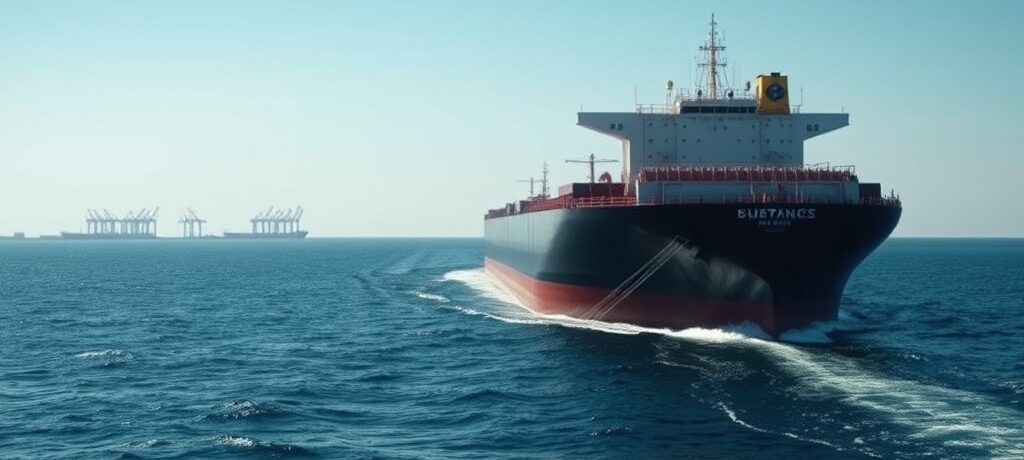
Tankers and gas carriers that once traversed Hormuz are now undertaking lengthy detours around South Africa’s Cape of Good Hope. This adds thousands of nautical miles and up to two weeks to many voyages. Furthermore, war-risk insurance premiums for vessels operating in the Middle East have surged, adding several million dollars to each transit. These escalating costs are already translating into higher prices for energy, chemicals, and manufactured goods across the board.
Full Economic Impact Still Unfolding
Despite these immediate impacts, the full economic consequences of the disruption are yet to be fully realized. Janssen emphasized that the scarcity is ‘still rippling through companies’ multi-tiered supply chains… [and] will take months for the full effect to surface and for supply chains to stabilize once the Strait is fully reopened.’
These concerns are widespread. A survey published on April 8 by Allianz Trade, the trade research arm of Germany’s Allianz Group, found that nearly two-thirds of 6,000 firms across 13 countries are worried about further supply chain disruptions and higher energy and commodity prices due to the war. The research also noted a significant increase in plans to accelerate reshoring or nearshoring – the practice of relocating production and suppliers closer to home or to more stable neighboring countries, a shift particularly pronounced in Europe.
Geopolitical Risk as a Permanent Strategic Factor
Beyond the immediate Hormuz disruption, some changes in global trade patterns appear to be becoming permanent. The Allianz Trade survey indicated that geopolitical risk, encompassing wars and tariffs, has become the top concern for two-thirds of firms, a sharp increase since 2025. Companies heavily reliant on China are increasingly adopting a ‘+1’ or ‘+2’ approach, adding at least one or two additional countries to their supply chains to mitigate risk. India, Indonesia, Vietnam, and Malaysia are reportedly benefiting most from this diversification, with increasing interest also noted in Europe as a manufacturing destination.
The long-standing ‘just-in-time’ manufacturing model is steadily giving way to a ‘just-in-case’ approach. Factories are rebuilding inventory buffers, with safety stockpiling reaching its highest level in three years, according to GEP’s March 2026 Global Supply Chain Volatility Index. This mirrors patterns observed during the pandemic and around Trump’s tariffs, when companies similarly rushed to build safeguards against uncertainty and potential shortages.
As businesses prepare for a future likely punctuated by additional geopolitical shocks, from tensions over Taiwan to instability on the Korean Peninsula, many have concluded that true resilience demands flexibility, redundancy, and stronger strategic partnerships across their entire supply network. John Sfakianakis, head of economic research at Saudi Arabia’s Gulf Research Center, warned in a recent article that vulnerability today is less about dependence and more about ‘resilience across interconnected systems’ like energy, finance, logistics, and political cohesion. The Iran war, he concluded, ‘is not so much a regional conflict as it is a stress test of how the international system functions under pressure.’