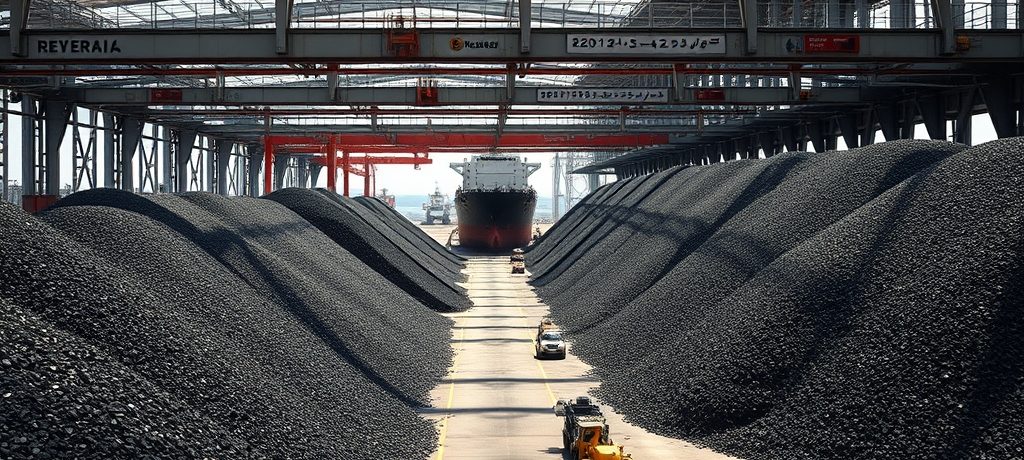
A coalition of Australians has initiated a significant legal challenge at the United Nations, asserting that their government’s ongoing approval and subsidization of coal and gas exports constitute a violation of fundamental human rights. The group, comprising ten members, argues that Australia’s substantial role as one of the world’s largest fossil fuel exporters directly exacerbates extreme weather phenomena—including devastating bushfires, catastrophic floods, intense heatwaves, rising sea levels, and toxic algal blooms—which are demonstrably harming its citizens and natural environments. This action marks a pivotal moment, representing the first legal claim of its kind brought before an international body or court since the International Court of Justice (ICJ) ruled last July that nations can be sued over climate change impacts.
Personal Testimonies Detail Climate Impact
The plaintiffs provide compelling personal testimonies detailing the severe and multifaceted impacts of a changing climate on their lives and communities. Dr. Barry Traill, a distinguished wildlife ecologist and dedicated volunteer firefighter, recounted the profound personal tragedy of the 2009 Black Saturday bushfires in Victoria, during which several of his experienced friends tragically lost their lives despite extensive preparation. ‘That deeply changed me,’ Traill stated, reflecting on the event, adding that ‘it became clear that the old rules around fires and survival no longer applied’ in the face of unprecedented intensity. He further served on the frontlines battling the severe blazes during the 2019 Black Summer fires in Queensland, where he witnessed firsthand that climate change is not a distant threat but ‘is already killing people and hurting lives, landscapes and communities across Australia.’ Traill issued a strong condemnation of governmental policy, asserting that ‘continuing to allow coal and gas companies to increase pollution, while people face worsening disasters, is a profound failure of responsibility.’
Brendon Donohue, another plaintiff in the legal claim, shared his harrowing experience during the 2022 floods in Brisbane. He described being trapped in his home for 10 days after the floods damaged his apartment block’s power supply, rendering lifts, intercom, and exits inaccessible. Donohue, who navigates daily life with blindness and mobility challenges, underscored the disproportionate impact of such events, explaining, ‘Because I live with blindness and mobility challenges, climate impacts affect me differently and can make everyday life much harder to navigate safely.’
Prof. Anne Poelina, an Indigenous woman hailing from the Kimberley region in Western Australia, provided a cultural perspective on climate displacement. She recounted being forced from the area surrounding the Fitzroy River, one of the state’s most vital waterways, due to catastrophic flooding. Poelina articulated the intrinsic connection between her people and the environment, stating, ‘When the river is healthy, our people are healthy,’ and conversely, ‘when the river suffers, our people suffer.’ Her deepest concern centered on ‘the intergenerational loss of cultural knowledge,’ emphasizing that ‘so much of our knowledge is not written down,’ but rather meticulously passed on through direct, physical presence on the ancestral lands.
Legal Framework and International Precedent
The legal challenge, spearheaded by Environmental Justice Australia, specifically targets the United Nations Human Rights Committee. Hannah White, a senior lawyer with the organization, articulated the precise objective of the group: ‘They are asking the United Nations Human Rights Committee to declare that it’s unlawful for Australia to continue approving and subsidising coal and gas for export without a plan to protect people from dangerous climate change.’ White emphasized the global reach of climate consequences and, by extension, Australia’s accountability, stating unequivocally that ‘climate harm caused by Australia’s coal and gas doesn’t stop at a border, and neither does Australia’s responsibility for it.’
This particular case carries significant weight, being the first such claim brought to an international body since the International Court of Justice (ICJ)—considered the world’s highest court with global jurisdiction—issued a landmark ruling last July. That ruling established a critical legal precedent, affirming that countries possess the right to sue each other for climate change damages, including those stemming from historic emissions of planet-warming gases. While any decision or declaration issued by the UN Human Rights Committee is not legally binding in the same manner as an ICJ judgment, it would nonetheless place considerable moral and political pressure on Australia. As one of the world’s largest coal and gas exporters, Australia would be under significant international expectation to respond to such a finding, potentially influencing future policy and investment decisions in its lucrative fossil fuel sector.
Economic Context and Global Implications
Australia’s economic landscape is significantly shaped by its role as a predominant global exporter of coal and gas. This robust export industry, while contributing substantially to national revenue, now faces increasing scrutiny through the lens of human rights and environmental justice. The group’s petition underscores a burgeoning global trend where the traditional financial imperatives of resource extraction are being increasingly challenged by arguments centered on human rights, climate accountability, and intergenerational equity. The direct link drawn between government approvals of fossil fuel projects and the lived experiences of climate-affected citizens represents a potent new front in climate litigation. The BBC has reached out to Environment Minister Murray Watt for official comment regarding these serious allegations, highlighting the government’s direct involvement in the policy decisions under review.
This unprecedented UN case represents a critical juncture for Australia, compelling a profound re-evaluation of its long-term energy export strategy. It forces a direct confrontation between the nation’s economic reliance on fossil fuels and its international human rights obligations, particularly in the face of mounting evidence of climate change’s tangible impacts on its populace. The outcome, while not directly enforceable through traditional legal mechanisms, could nonetheless establish a powerful moral and political precedent, influencing how major fossil fuel-exporting nations are held accountable on the global stage for their contributions to a warming planet and the resultant human suffering. This development signals a growing global movement to integrate human rights considerations into climate policy and international trade discussions.