Electric vehicle (EV) ownership continues to be hampered by persistently high insurance premiums, which can be 10-25% more expensive than for petrol or diesel cars. This significant cost differential stems from the inherent design and repair complexities of EVs, leading to average repair costs that are 30% higher and repair times 14% longer, according to Thatcham Research, an organization working on behalf of the insurance industry.
Minor Collisions, Major Costs
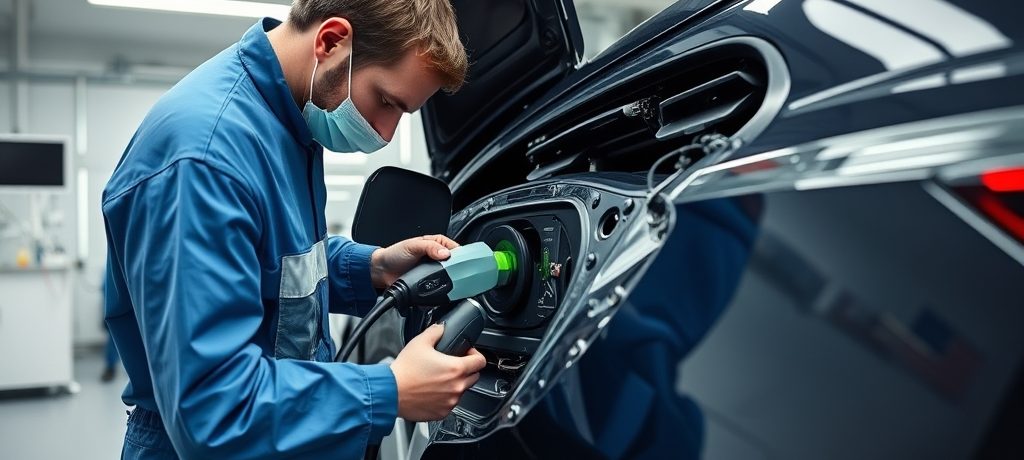
The financial impact of even minor incidents on EVs is starkly illustrated by crash tests conducted by Thatcham Research. In a controlled 6mph impact, simulating a common car park prang, a Dacia Spring EV sustained damage that, while seemingly minor externally, revealed substantial internal issues. Senior test engineer Sean Hoad explained that the high-voltage charging port, inverter, and associated cabling, all integrated into one large unit at the front of the car, were badly broken. “This is all one big unit, meaning we can’t just replace the front charge port. We have to replace the charger itself, the inverter, and some of the cabling,” Hoad stated. The estimated repair cost for this damage alone was approximately £4,000, making it “more than likely this car would be written off” by an insurer.
Design Philosophy Drives Up Repair Bills
The fundamental design principles of many EVs contribute significantly to these elevated repair costs. Dan Harrowell, principal advanced technologies engineer, highlighted that a primary focus on weight reduction in EVs, which are inherently heavy, leads to extensive component integration. “To save some weight, there’s a lot of integration of components. They’re glued together, rather than using fixings, which is great to reduce weight, but not great for repair, because you have to replace whole systems rather than individual components,” Harrowell explained. This approach means that even localized damage often necessitates the replacement of entire, expensive assemblies rather than individual, cheaper parts.
A critical example of this challenge involves the EV battery pack. Harrowell pointed to a nearly-new vehicle with minor scratches on its protective battery casing following an accident. Despite the core battery cells remaining unharmed, the entire battery assembly, supplied as a single unit, would require replacement for a full repair. Given that the battery can constitute about 40% of the car’s total value, such a replacement is prohibitively expensive, making “any damage at all, if it involves a replacement, risks writing off the vehicle.” Industry sources indicate that insurers have historically been resistant to making batteries easier to repair, further exacerbating this issue.
Market Pressures and Technician Shortages
Beyond design, market dynamics and infrastructure limitations also play a role in the high cost of EV insurance. The influx of Chinese EV manufacturers into the UK market, for instance, presents unique challenges. Dan Harrowell noted that lower labour rates in China reduce the incentive for manufacturers to design cars for minimal repair work, a stark contrast to the higher labour costs in Europe where simpler repair processes are crucial. “We’ve had to work with them to really help them to understand the difference in our market,” he said.
Stuart Masson, editor of The Car Expert, added that while EVs have fewer components than conventional cars, “a lot of those components that they do have are quite expensive.” Furthermore, a shortage of specialized parts and qualified technicians means “the cars have to wait longer in the workshop, which means the insurance company has to give you a loan car for longer, which drives up the cost of repairs, which drives up the cost of insurance and premiums for everybody.”
Industry Initiatives Pushing for Change
Recognizing the barrier that high insurance costs pose to wider EV adoption – with EV sales making up almost one in three new cars sold in the UK in June, according to the SMMT – significant efforts are underway to address these issues. Steve Fowler, co-founder of Carblah, emphasized, “It’s absolutely crucial electric vehicles become cheaper to insure.”
Thatcham Research is at the forefront of these initiatives, developing a “blueprint for manufacturers” with recommendations aimed at simplifying and reducing the cost of EV repairs, thereby preventing unnecessary write-offs. These recommendations include strategic relocation of vulnerable components, such as charging ports, to less exposed areas. Another key proposal is the redesign of parts like battery casings to be modular and replaceable, ensuring the entire battery unit doesn’t need to be discarded after minor damage.
Major manufacturers are responding. Renault, which owns Dacia and is a significant EV producer, is actively exploring ways to make repairs cheaper, including “working on ways to make repairs to battery packs more technically feasible, while respecting safety protocols…as well as satisfying the requirements of insurers.”
These collaborative efforts across the automotive and insurance sectors are already yielding results. Recent EV models demonstrate an average repair cost that is only 18% higher than their conventional counterparts, a notable improvement from the previous 30% average. This positive trend is expected to translate into more affordable insurance premiums, ultimately helping to accelerate the transition to electric mobility by making EVs a more financially viable option for a broader range of consumers.