In recent months, the North American mining story has evolved from a simple commodity rally into a policy-driven investment theme. Washington has expanded measures meant to secure mineral supply and protect domestic processing, while Ottawa has paired critical-mineral funding with infrastructure and permitting support. With copper and gold both still trading near historic highs, the setup is increasingly favoring companies with quality assets in stable jurisdictions. (The White House)
Expansion of U.S. Mineral Security Measures
In the United States, the shift has been decisive. On March 20, 2025, the White House issued an order to accelerate American mineral production and explicitly included copper and gold among the priority minerals. In January 2026, President Trump followed with a proclamation stating that dependence on processed critical minerals posed a national-security risk. Most recently, rules effective April 6, 2026 strengthened Section 232 tariffs on a broad range of copper articles and derivative products, with duties tied to full customs value and rates ranging from 10 percent to 50 percent depending on the product and domestic smelting content. (The White House)
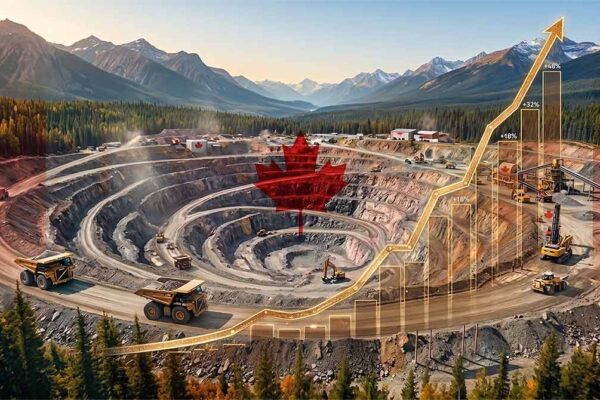
Canada has moved in parallel, but with a more investment-led model. At PDAC 2026, Ottawa launched a C$1.5 billion First and Last Mile Fund, highlighted an upcoming C$2 billion Critical Minerals Sovereign Fund, and announced up to C$165.2 million for 22 projects expected to unlock more than C$434 million in capital. The government has also said new alliance partnerships could unlock C$12.1 billion in critical-mineral projects, while Finance Canada has proposed extending the 15 percent Mineral Exploration Tax Credit through March 31, 2027 to help junior explorers raise capital. In British Columbia, exploration permits are now targeted to be processed within 40 to 140 days, while power investments continue to support projects linked to Red Chris, KSM and Highland Valley Copper. (Government of Canada)
Why Copper and Gold Remain the Two Metals to Watch
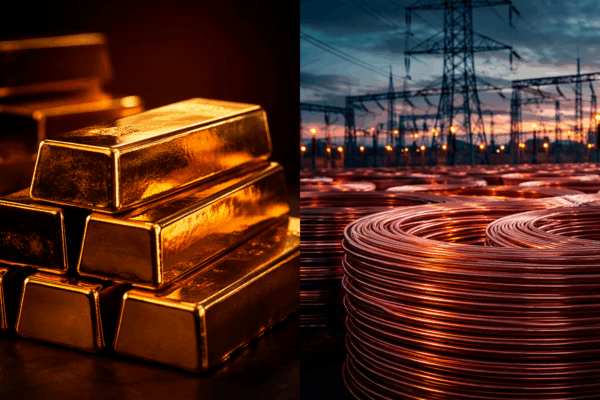
Copper remains the clearest strategic metal in the market. The International Energy Agency said copper briefly rose above US$14,500 per tonne in January 2026 as supply disruptions, tariff-driven inventory building and the difficulty of bringing on new mines collided with demand from electrification and AI-related power infrastructure. JPMorgan expects a refined copper deficit of roughly 330,000 tonnes in 2026, and spot copper on April 15 was still about 30 percent above year-ago levels even after easing from its January peak. (IEA)
Gold is telling a parallel story. Reuters’ latest analyst survey expects another record year for bullion in 2026, driven by geopolitical uncertainty and ongoing central-bank buying. Gold was trading around US$4,804 an ounce on April 15, 2026, after touching an all-time high near US$5,608 in late January. That keeps gold attractive not only as a defensive asset, but also as a powerful valuation anchor for companies that can add credible ounces in the ground. (Investing.com)
The Big Winners So Far Have Been the Seniors
The market has already rewarded the large producers and streaming companies. BHP said copper accounted for 51 percent of underlying EBITDA in its first-half fiscal 2026 results. Teck reported C$1.5 billion in adjusted EBITDA in the fourth quarter of 2025, supported by significantly higher copper prices. Agnico Eagle delivered record annual free cash flow and operating cash flow in 2025, while Barrick and Wheaton also posted major gains in revenue, cash generation and profitability. In other words, the senior end of the copper-and-gold trade has already capitalized on the move. (BHP)
Why Canadian Junior Miners Still Look Early
That is precisely why the junior segment deserves attention now. Despite stronger metal prices, financing conditions for explorers have remained selective, and one Canadian market analysis found that only about 10 percent of mining equity capital raised in 2025 reached companies below C$100 million in market value, where much of the junior exploration universe sits. Even at PDAC 2026, where attendance hit a record and sentiment improved, industry leaders still stressed that exploration tax credits and predictable permitting remain essential for smaller companies. (Investing News Network)
That mismatch is where the growth potential becomes compelling. Copper and gold are among the most sought-after metals in today’s market, yet many Canadian juniors are still valued as though capital will remain scarce and project timelines will stay static. Meanwhile, the backdrop is getting better: Ottawa is extending financing tools, funding roads and power, and trying to build domestic mineral value chains, while the first signs of a broader speculative return are already visible in the TSX Venture market. The 2026 Venture 50 ranking included 48 mining companies with a combined market capitalization of C$19.9 billion and an average share-price gain of 443 percent, suggesting liquidity is returning before the entire sector has caught up. (Government of Canada)
Conclusion
The latest U.S. and Canadian measures are reshaping the mining investment landscape. Washington is treating mineral supply as a national-security priority and tightening trade defenses around copper, while Canada is lowering some of the traditional barriers to project development through funding, infrastructure and tax support. Copper and gold remain highly sought-after, and the largest mining companies have already translated that strength into earnings and cash flow. Canadian junior miners, however, have not yet fully reflected the same macro backdrop in their prices. That is why this is the moment to think seriously about the space: in strong commodity cycles, the majors often move first, but the biggest percentage re-ratings can come later from juniors with quality assets, better access to capital and renewed investor attention.
Sources:
The White House, Government of Canada, International Energy Agency, Reuters, BHP, Teck Resources, Agnico Eagle, Barrick Mining, Wheaton Precious Metals, PDAC and TMX Group.