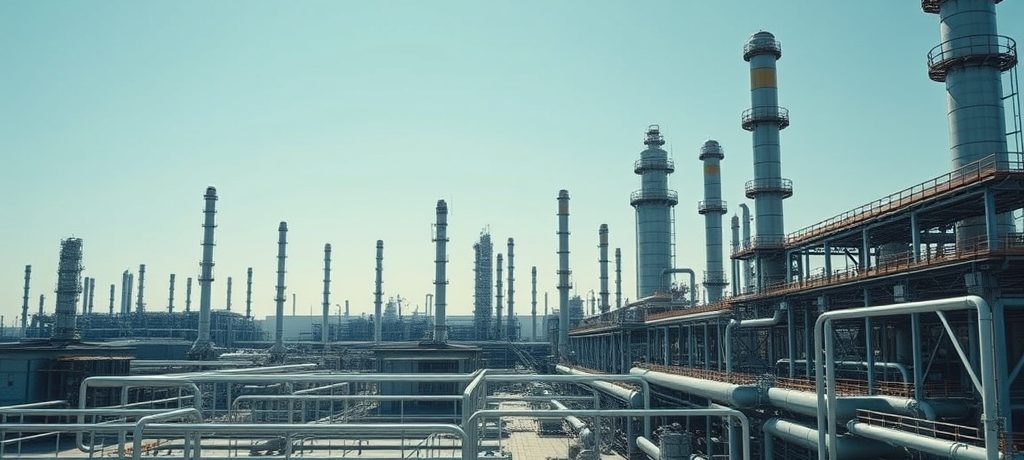
American investor A. Gary Klesch’s Klesch Group Ltd has significantly expanded its footprint in Europe’s energy sector, becoming Germany’s second-largest oil refiner following the strategic acquisition of BP Plc’s Gelsenkirchen refinery. This pivotal transaction not only consolidates Klesch’s position within the continent’s industrial landscape but also establishes the Malta-based company as the biggest shareholder in one of Germany’s most important crude oil pipeline networks. The deal unfolds at a critical juncture, as European energy security faces heightened scrutiny and supply chains remain under stress from ongoing conflicts in Ukraine and the Middle East.
Klesch’s Strategic Acquisitions
For over three decades, A. Gary Klesch has built a distinctive investment strategy centered on acquiring ‘struggling steel mills, aluminum smelters, chemical plants and oil refineries.’ His approach is rooted in the conviction that he ‘could squeeze value from businesses their previous owners no longer wanted.’ Klesch Group’s foray into the refining business began in 2010, and the Gelsenkirchen acquisition represents a substantial leap in its operational scale. Prior to this deal, Klesch’s two existing refineries, located in Heide, Germany, and Kalundborg, Denmark, collectively ‘process less crude than Gelsenkirchen’s roughly 265,000 barrels per day.’ The Gelsenkirchen facility itself is a cornerstone of Germany’s industrial capacity, vital for producing ‘fuel for trucks, aircraft and ships, and unpins much of the country’s chemical industry.’ This expansion underscores Klesch’s long-term commitment to a sector undergoing profound structural changes.
Shifting Landscape for Oil Majors
The divestment of the Gelsenkirchen refinery by BP is not an isolated event but rather a clear signal of a broader, systemic transformation within Europe’s refining industry. The continent’s major integrated energy companies, which were once the bedrock of its post-war industrial expansion, are now rigorously ‘reassessing their refining portfolios.’ This strategic pivot is driven by a confluence of escalating operational and regulatory pressures. Foremost among these are the increasing costs associated with maintaining ‘aging plants,’ the financial burden imposed by ‘tougher environmental regulations’ to ensure compliance, and the unpredictable impact of operational disruptions. A recent example cited is a ‘fire last month’ at Gelsenkirchen itself, which ‘forced some of the plant’s units, including one that’s key to making diesel, to temporarily shut down,’ highlighting the inherent vulnerabilities and costs.
BP explicitly stated on Monday that it anticipates ‘to save as much as $1 billion a year in operating costs by selling the facility.’ Tibor Fedke, a partner at the Noerr law firm with extensive experience advising on such transactions, articulated the prevailing sentiment among majors, noting that ‘holding onto refineries no longer makes financial sense for many oil majors.’ Fedke also pointed out a significant environmental incentive for these divestments, explaining that such sales offer the ‘extra benefit of eliminating the largest CO2 footprint from a company’s balance sheet.’ This trend is widespread, with companies such as ‘BP, Shell Plc and Exxon Mobil Corp.’ all reportedly having ‘weighed shedding assets or scaling back operations at some of their European facilities’ in recent years.
Market Dynamics and Investment Risks
While the long-term structural pressures have made many refinery sites less appealing to large, integrated energy companies, recent geopolitical events have paradoxically created specific, albeit potentially transient, opportunities. The ‘disruption to global fuel markets following Russia’s invasion of Ukraine has boosted refining margins,’ thereby presenting an attractive window for ‘privately owned commodity traders and investment firms willing to bet they can generate returns.’ This opportunistic environment, however, is not without its inherent risks. Fedke cautioned that ‘should margins weaken again, refineries’ high operating and investment costs could become difficult to justify,’ underscoring the cyclical nature of the industry. The sale to Klesch Group, a privately held Malta-based entity, has also ‘raised concern about energy security in Europe’ among some observers, particularly given the current global context where ‘supply chains are under stress from wars in Ukraine and the Middle East.’
Klesch’s Operational History and Regulatory Engagements
Klesch Group’s operational history in Europe has demonstrated both its strategic resolve and its willingness to engage with regulatory challenges. The company ‘has previously clashed with regulators,’ most notably ‘suing the German government in 2023 over a temporary windfall tax on energy companies introduced after Russia’s invasion of Ukraine.’ This legal action highlights Klesch’s assertive stance in protecting its commercial interests. Furthermore, the company ‘shelved plans for a green hydrogen plant at the Heide site,’ a decision that reflects a pragmatic, perhaps cautious, approach to investments in emerging green technologies. Klesch Group itself ‘declined to comment to Bloomberg News’ regarding the specifics of the Gelsenkirchen acquisition, maintaining its private operational posture.
The New Breed of Refinery Owners
The evolving landscape of refinery ownership is increasingly characterized by the emergence of a distinct new category of buyers. According to Tibor Fedke, these ‘new generation of refinery buyers are typically specialty funds or family-owned companies that are less reliant on ‘Western capital markets or green reporting.” This characteristic implies a different investment philosophy and potentially a greater appetite for the operational complexities and regulatory burdens that larger, publicly traded oil majors are systematically seeking to divest. The acquisition by Klesch Group, a privately held entity, perfectly exemplifies this trend, signaling a significant and ongoing shift in the stewardship of critical energy infrastructure across Europe.
The acquisition of BP’s Gelsenkirchen refinery by A. Gary Klesch’s Klesch Group marks a pivotal moment in the ongoing restructuring of Europe’s energy sector. It underscores the strategic imperative for oil majors to optimize their portfolios and mitigate environmental liabilities, while simultaneously illuminating the opportunistic investments by private entities prepared to navigate the inherent complexities and risks of a volatile global market. As these vital energy assets transition to new ownership models, the implications for Germany’s industrial capacity, its energy supply, and broader European energy security will undoubtedly remain a central point of observation and analysis.