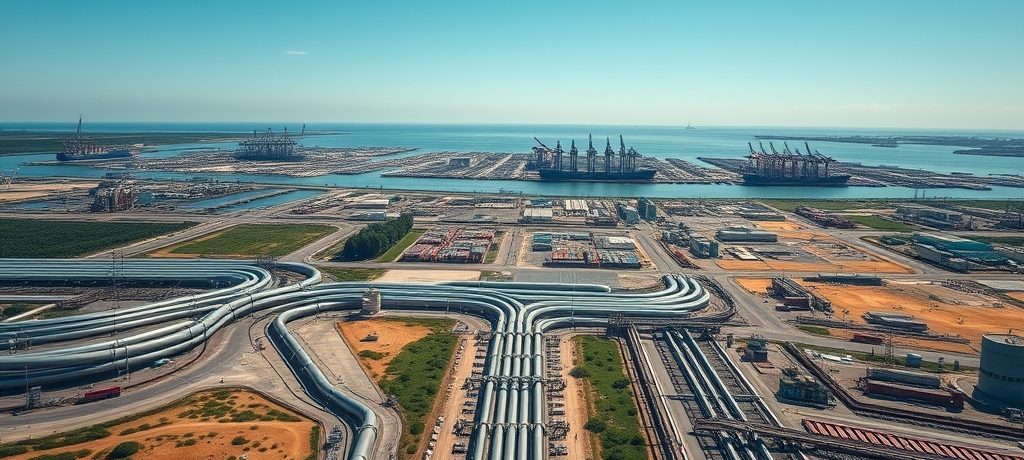
Canada is moving forward with plans to construct a significant new oil pipeline aimed at diversifying its export markets beyond the United States, with Prime Minister Mark Carney announcing that the state-owned Trans Mountain Corp. has been selected to lead the project. The proposed conduit will connect Alberta’s vast oil sands reserves to a deepwater port in the Vancouver area, designed to facilitate shipments to key Asian economies.
Pipeline to Asia Targets Growing Demand
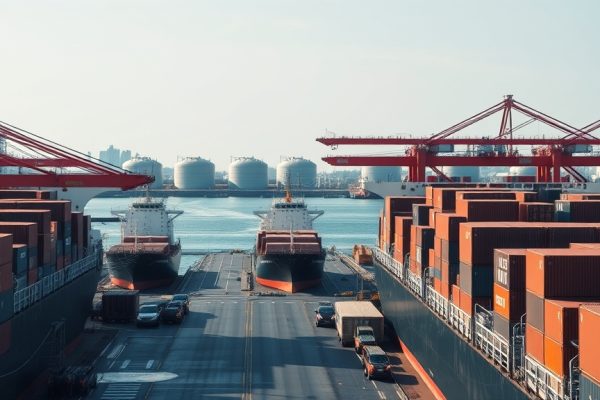
The ambitious project envisions a 1 million-barrel-a-day pipeline, according to the government of Alberta, which has identified Japan, Korea, China, and India as primary target markets. This strategic pivot seeks to capitalize on the substantial and growing demand for energy in these Asian nations. The pipeline will link to a port capable of accommodating Very Large Crude Carriers (VLCCs), enabling efficient and large-scale exports.
Prime Minister Carney stated that the new pipeline will largely follow the existing Trans Mountain line, which currently represents Canada’s sole crude pipeline reaching an ocean port. This existing infrastructure has historically limited Canada’s export options primarily to the U.S. market. The expansion aims to rectify this by opening up lucrative new international avenues for Canadian crude.
Shared Partnership and Indigenous Involvement
Carney, speaking in Calgary alongside Alberta Premier Danielle Smith, emphasized a collaborative approach to the project. “Canada and Alberta will be equal partners in this project, and there will be a meaningful ownership stake for Indigenous communities,” he announced. This commitment to shared ownership underscores a broader strategy to ensure that the economic benefits of such large-scale infrastructure projects are distributed more broadly and that Indigenous groups have a vested interest in their success.
The partnership between the federal and provincial governments, despite occasional political differences between Carney and Smith, is driven by a common objective: reducing Canada’s heavy reliance on the U.S. market. This goal has gained urgency following trade disputes initiated by former U.S. President Donald Trump, which highlighted the vulnerabilities of an export strategy concentrated on a single trading partner.
By securing better prices for Canadian oil in growing Asian markets, both leaders believe they can significantly boost Alberta’s economy and provide a buffer against the protectionist trade policies that have characterized recent U.S. trade relations. This diversification is seen as crucial for the long-term economic stability and wealth generation of the province and the nation.
Government Backstop and Financial Projections
The decision to channel the project through Trans Mountain Corp. effectively provides a government backstop for an undertaking expected to cost tens of billions of dollars. The Alberta government has projected construction costs for the project to range between C$35.2 billion ($24.8 billion) and C$43.7 billion if investment is greenlit within the next three years. Despite these substantial upfront costs, the government forecasts that the pipeline could increase Canada’s real gross domestic product by more than 0.6% annually by the 2040s.
In a significant development, Calgary-based Pembina Pipeline Corp. has entered into a non-binding agreement to participate in the construction. Pembina will initially hold a 10% stake in the project, with an option to increase its ownership to 20% once the pipeline is operational. The project has now been formally submitted to the federal Major Projects Office for review, a process that could potentially expedite regulatory approvals.
Carbon Capture as a Condition
A critical component of the government’s support for the new pipeline is the advancement of the Pathways initiative, a large-scale carbon capture system designed to reduce emissions from the energy sector. Prime Minister Carney had previously indicated that progress on this environmental initiative was a prerequisite for federal backing of the pipeline expansion.
Kendall Dilling, president of the Oil Sands Alliance, which represents five major oil sands companies, confirmed that an agreement has been reached for a 2032 start date for the Pathways project, with construction slated to commence later this decade. Dilling described the negotiations as a complex process where “no one party got everything they wanted,” but ultimately, a consensus was achieved through a commitment to finding common ground.
The strategic move to build a new oil export conduit to Asia, coupled with a commitment to carbon capture technology, signals a multifaceted approach by the Canadian government to balance energy development with environmental considerations and economic diversification. The success of this endeavor will hinge on navigating complex regulatory landscapes, securing continued investment, and meeting the evolving demands of global energy markets.