Canada is poised for a monumental infrastructure overhaul, with projected investments reaching US$4.7 trillion between 2024 and 2050. This staggering sum, detailed in a joint forecast released Wednesday (June 10) by PwC Canada and Oxford Economics, is primarily driven by two critical forces: the intensifying global demand for critical minerals and escalating military security requirements. The report positions Canada as a significant player in the global infrastructure market, with annual spending anticipated to climb 45 percent, from US$145 billion to US$210 billion, by mid-century, securing the country’s spot as the fifth-largest infrastructure market worldwide.
Resource Sector Commands Substantial Capital
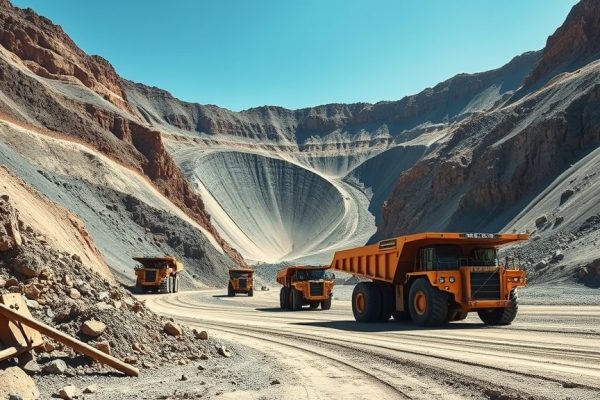
A deep dive into the forecast reveals a pronounced concentration of capital within Canada’s resource sector. This segment alone is expected to capture approximately 30 percent of the nation’s total infrastructure mix by 2050, making resource infrastructure the single largest allocation in the country’s long-term spending model, surpassing both transportation and social infrastructure. Annual expenditures dedicated to resource-related infrastructure, encompassing networks for the extraction and transport of metals, minerals, oil, and gas, are projected to increase from US$53 billion to US$63 billion by 2050.
While traditional oil and gas assets continue to dominate this allocation, commanding over 72 percent, the report highlights a steady expansion in spending for metals and minerals. This sub-sector is projected to account for 26.22 percent of the budget, or US$16.6 billion, by 2050. Notably, Canada stands out globally; alongside Australia, it is one of only two advanced peer economies forecast to increase annual resource infrastructure spending between 2024 and 2050. In stark contrast, the United States, the United Kingdom, and Germany are expected to see their annual resource infrastructure spending decline over the same period. This strategic focus on resources underscores Canada’s role in supplying critical materials to a global market.
Defense Spending Sees Unprecedented Growth
Beyond resources, defense infrastructure emerges as Canada’s fastest-growing segment. The forecast indicates a dramatic 389 percent jump in defense infrastructure outlays between 2024 and 2050. This significant expansion is primarily attributed to Canada’s commitments to NATO spending and heightened concerns regarding Arctic sovereignty. The surge aligns with the nation’s pledge to allocate an additional 1.5 percent of its gross domestic product (GDP) to critical security assets, signaling a robust reorientation towards national security priorities.
Diversification Challenges and Funding Imperatives
Despite the robust outlook for resources and defense, the report also brings to light areas where Canada’s infrastructure development lags behind peer nations, exposing a lack of diversification in other high-growth sectors. For instance, nuclear power infrastructure in Canada is expected to grow by just 11 percent by 2050, significantly trailing the 17 percent growth projected for the US and a global average of 45 percent. Similarly, in vital trade connectors, domestic airport infrastructure spending in Canada is projected to grow 78 percent, falling short of the 99 percent growth anticipated for the US and 93 percent globally. Canada is also expected to lag behind the UK and Australia in attracting data center investment, indicating potential missed opportunities in the digital economy.
In response to these identified gaps and to streamline development, Canadian policy is undergoing a shift to address regulatory bottlenecks. The federal government has proposed a one-year review target for major developments, while provinces such as Alberta have introduced legislation like Bill 30, aiming to impose a 120-day approval window for industrial and mining applications. These measures seek to accelerate project delivery and enhance Canada’s competitiveness.
However, a critical challenge remains: funding this ambitious US$4.7 trillion pipeline. The report explicitly warns that public balance sheets alone will be insufficient. Consequently, the authors of the report emphasize the essential role of private institutional capital and blended public/private financing structures to meet the forecast spending requirements. Currently, Canada allocates 6.6 percent of its GDP to infrastructure, which trails high-performing peer nations that average 7.4 percent. Closing this gap to safeguard long-term economic competitiveness will necessitate an additional US$34 billion in annual expenditures through 2050, highlighting the urgent need for innovative financing solutions to realize Canada’s infrastructure ambitions.