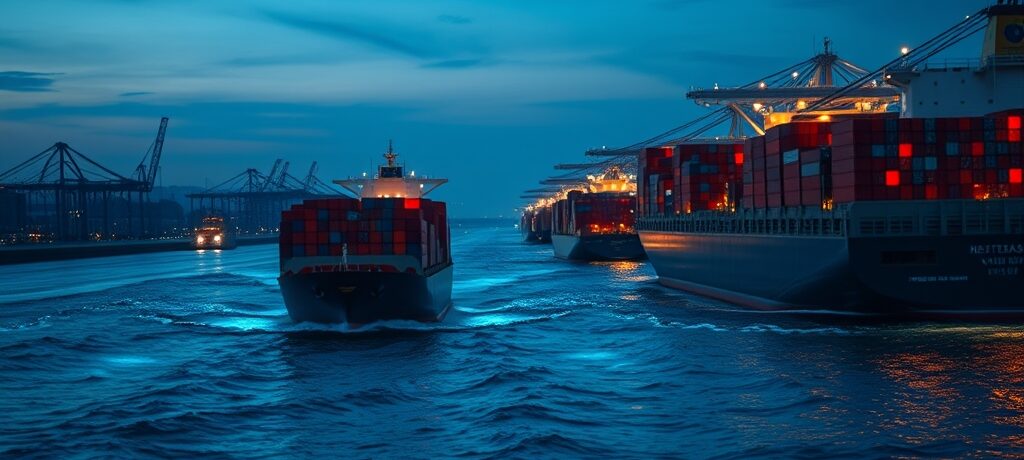
China’s export sector demonstrated a robust and unexpected rebound in April, with outbound shipments soaring 14.1% from a year earlier. This significant surge defied initial concerns over shipping disruptions caused by the war in Iran, as global trade volumes received a substantial boost from a burgeoning investment boom in artificial intelligence.
According to a statement released by the General Administration of Customs on Saturday, the 14.1% rise in exports far outstripped the median forecast of 8.4% from a Bloomberg survey of economists. This performance marks a sharp acceleration from the modest 2.5% gain recorded in March. Concurrently, imports also saw a substantial increase, rising 25.3%, which contributed to a trade surplus of $84.82 billion for the month.
Geopolitical Headwinds and Past Resilience
The improvement in outbound shipments follows a surprisingly steep slowdown in China’s exports during the first month of the war, which saw the US and Israeli attacks on Iran and Tehran’s subsequent retaliation spread upheaval throughout the Middle East and beyond. The conflict, which erupted at the end of February, has forced the effective closure of the Strait of Hormuz, a vital waterway for global energy traffic. This reduction in traffic risks creating a drag on imports, potentially pushing up oil prices and threatening foreign demand for Chinese goods. China has added its voice to global pressure to stop the conflict.
The geopolitical backdrop also looms large ahead of a planned summit in Beijing next week between US President Donald Trump and his Chinese counterpart, Xi Jinping. Trade imbalances will be a key focus, especially after the US merchandise trade deficit with China widened in March for a third consecutive month, according to Commerce Department data. In March, China also recorded its smallest trade surplus in more than a year, driven by a sharp rise in imports of high-tech products such as chips.
AI Investment Fuels Global Demand
Despite these geopolitical headwinds, the strength of sales abroad powered China to an unprecedented trade surplus of $1.2 trillion in 2025. Shipping volumes so far in 2026 are largely maintaining these record-setting levels, thanks in part to strong global demand driven by investments in data centers and power equipment, directly linked to the widespread adoption and development of artificial intelligence technologies. Chinese factories have previously demonstrated their adaptability, navigating last year’s tit-for-tat with the US over tariffs by successfully redirecting more products to regions including Africa and Europe, even when facing pushback from local producers.
Positive Economic Indicators Emerge
The resilience of the export sector aligns with a surprise rebound in economic growth observed during the first three months of the year. Evidence gathered so far this quarter further points to another strong showing for firms heavily reliant on foreign sales. A sub-index of new export orders within the official manufacturing purchasing managers’ index (PMI) expanded in April for the first time in two years. Similarly, a private gauge of activity at export-oriented firms improved more than forecast last month, reaching its highest level since December 2020.
Lingering Risks and Policy Outlook
While the war in Iran is doing little—for now—to hold back overseas sales, persistent warning signs remain. High-frequency data tracked by Bloomberg Economics for April indicated that overall economic activity remained weak. Should exports maintain their resilience and industrial growth hold up, authorities will likely hold off on implementing further stimulus measures. However, with cost pressures mounting and domestic spending stagnating, China could find itself vulnerable in the event of a protracted conflict in the Middle East, potentially impacting its hard-won trade momentum.
The April export figures underscore China’s remarkable ability to navigate complex global challenges, leveraging technological investment booms to offset geopolitical instability and maintain its position as a dominant force in international trade. The coming months will reveal whether this resilience can be sustained against lingering domestic vulnerabilities and the unpredictable trajectory of global conflicts.