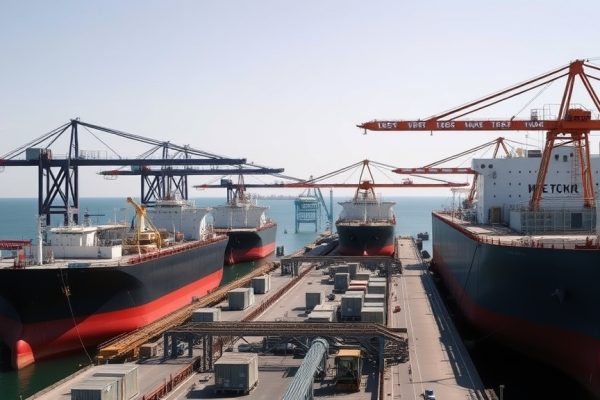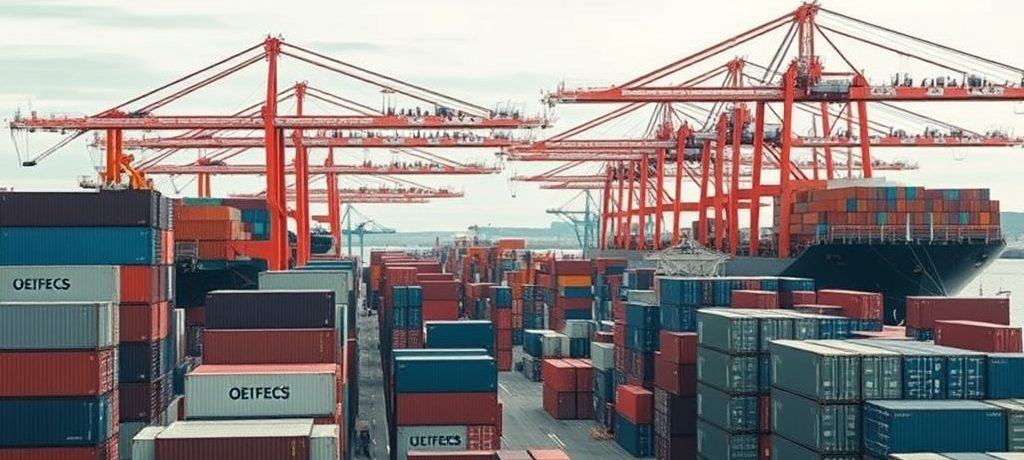
Beijing has unveiled a potent new set of regulations that significantly bolster its ability to punish foreign companies for relocating manufacturing out of China or reducing their reliance on Chinese supply chains. These measures, introduced in April as the Regulations on Industrial and Supply Chain Security, are designed to deter ‘decoupling’ and ‘de-risking’ efforts by Western nations and their corporate entities, creating a fresh layer of complexity for multinationals operating across the United States, the European Union, and China.
Beijing Flexes Regulatory Muscle
The implications of these new rules extend beyond China’s borders. In a striking example, Chinese authorities recently blocked Meta’s proposed $2 billion acquisition of Singapore-based AI startup Manus, citing national security concerns. Despite being headquartered outside China, Manus possesses strong Chinese roots and was deemed a strategic asset in the global AI race. This move signals Beijing’s intent to scrutinize and potentially impede deals structured internationally if they are perceived to undermine China’s strategic interests.
The Regulations on Industrial and Supply Chain Security grant Beijing stronger powers to retaliate against foreign firms that shift production to countries like Vietnam or India, or reshore operations back to their home countries. Companies could face penalties, including fines and blacklisting from supply chains, if they comply with export controls or sanctions imposed by the US and EU that target Chinese entities. Rebecca Arcesati, an analyst at the Mercator Institute for China Studies (MERICS), told DW that these measures are ‘effectively meant to derail de-risking measures such as those the EU and member states, including Germany, have been taking to reduce dependency on China.’
Multinationals Caught in the Crossfire
Since the COVID-19 pandemic, both the EU and the US have intensified efforts to build more resilient supply chains less dependent on China. This has led many foreign companies to scale back their operations in the country. The trade tensions, exacerbated by former US President Donald Trump’s tariffs in 2025, have accelerated this shift, contributing to a more fragmented global trading system.
The European Union, in particular, is increasingly taking steps to protect its trade. In March, the European Commission detailed its Industrial Accelerator Act (IAA), which aims to reduce strategic dependencies on Chinese goods and investments and counter unfair competition from Chinese rivals often benefiting from substantial state subsidies. This regulatory push-and-pull places multinational corporations, especially German automakers like Volkswagen, BMW, and Mercedes-Benz, in a precarious position. These companies rely heavily on their substantial market share in China and profit from producing vehicles there for export. Simultaneously, they face domestic pressure to reduce reliance on Chinese components and compete with rapidly advancing Chinese electric vehicle (EV) manufacturers.
An ‘Extraterritorial Toolbox’
Jens Eskelund, president of the European Union Chamber of Commerce in China, described Beijing’s new powers as an ‘extraterritorial toolbox’ that will add significant ‘complexity in global trade.’ He warned of potential scenarios where companies find it ‘impossible to comply with them all’ due to conflicting regulatory measures in the US, Europe, and China.
Anecdotal evidence suggests China is already exerting pressure on foreign companies regarding their relocation plans. Arcesati noted that China’s leadership is focused on achieving national self-sufficiency and ensuring the world remains reliant on China for supply chains and technology. Beijing has previously demonstrated its willingness to weaponize supply chains, as seen in its export controls on rare earth elements and critical minerals last year – materials essential for EVs, defense systems, and advanced electronics.
The EU is facing considerable pressure from Beijing to dilute the IAA. Several EU member states with strong economic ties to China, including Germany, are advocating for a more cautious approach. Despite the EU’s significant trade deficit with China, which reached €360 billion ($424 billion) in 2025, Brussels may find it challenging to maintain a firm stance. Alice Garcia Herrero, Chief Economist for Asia Pacific at French Investment Bank Natixis, advised European policymakers to ‘double down,’ cautioning that ‘If we keep on accepting the threat from China, we’ll have less and less room.’