Crude oil prices catapulted on Friday, extending gains from the previous session, as a highly anticipated U.S.-China summit concluded without any announcement regarding potential Chinese mediation to resolve the ongoing gulf war. This diplomatic stalemate leaves the critical Strait of Hormuz blockade firmly in place, reigniting concerns over global energy supply and inflationary pressures that threaten major economies.
Market Reacts to Diplomatic Deadlock
The immediate market reaction was sharp and decisive, with WTI Crude Oil for June month delivery last seen trading up by a significant $4.18, or 4.13%, reaching a price of $105.35 per barrel. This substantial jump underscores the market’s acute sensitivity to geopolitical stability in the Middle East, particularly concerning the unimpeded flow of oil through the Strait of Hormuz, a vital global chokepoint.
The much-awaited U.S.-Iran summit, which unfolded in China, saw U.S. President Donald Trump engage in extensive meetings with Chinese President Xi Jinping over two days. Market participants had closely watched these proceedings for any indication that China, a nation with strong ties to Iran and a major recipient of nearly 90% of Iranian oil exports, might leverage its influence to intervene or mediate in de-escalating the hostilities between the U.S. and Iran. However, the summit concluded without any such breakthrough or public commitment to a resolution, dashing hopes for a diplomatic off-ramp.
Geopolitical Tensions Persist Amidst Unresolved Conflict
Following the summit, President Trump offered a brief statement, noting that the U.S. had made “fantastic trade deals” beneficial for both nations, but conspicuously refrained from elaborating on any progress or lack thereof regarding Iran. Earlier in the week, prior to his departure for China, Trump had ominously stated that the U.S. could end the gulf war either through diplomacy or “otherwise,” a declaration that had already fueled renewed war concerns among investors and analysts. During his visit, Trump also publicly affirmed that President Xi agreed with him on two critical points: that Iran should not possess a nuclear weapon and that the Strait of Hormuz “must be free for all countries to transit.” In an interview with Fox News, the U.S. President further expressed his dwindling patience, urging Iran to “reach a deal as early as possible.”
The absence of any substantial announcement concerning Iran after the high-stakes summit immediately renewed fears of an escalating military conflict in the Gulf, directly contributing to the pronounced surge in crude oil prices. Adding another layer of complexity, aboard Air Force One, Trump reportedly informed reporters that the U.S. had offered a “ceasefire” proposal “as a favor to Pakistan,” though he personally was not in favor of it, indicating a fraught and reluctant diplomatic approach.
Meanwhile, Iran’s Foreign Minister Abbas Araghchi, addressing a press conference after a meeting of Foreign Ministers of BRICS nations in India, reiterated Iran’s position, stating unequivocally that “there is no military solution for issues involving Iran.” Araghchi further stressed that “all vessels can pass through the Strait of Hormuz if they coordinate with Iranian authorities,” a statement that highlights Iran’s assertion of control over the waterway despite international calls for free transit.
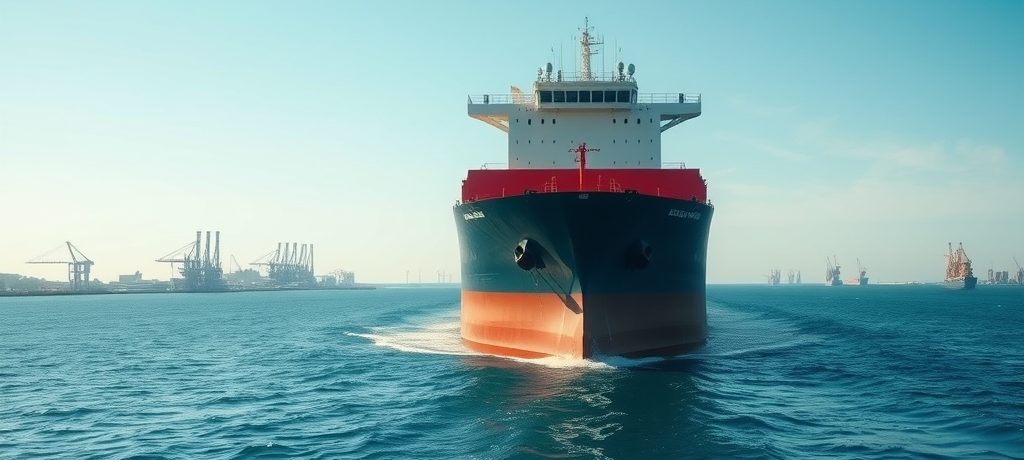
The operational status of the Strait of Hormuz has been central to the crisis. Soon after the war broke out, Iran effectively shut the strait, leading to immediate global supply concerns. A few weeks later, the U.S. Navy enforced a counter-blockade on all ships transiting to and from Iranian ports, further tightening the squeeze on oil flows. The consequent rise in oil prices due to this severe supply disruption has been a consistent pattern, with prices only turning lower whenever positive indications on U.S.-Iran peace talks surfaced, but otherwise surging steadily, reflecting persistent market anxiety.
Economic Fallout and Revised Global Forecasts
The sustained disruption in oil supply and the escalating crude oil prices are now thrusting intense inflationary pressure on all major economies worldwide. Energy experts are increasingly warning of potential “oil demand destruction,” a scenario where high prices lead to a significant drop in consumption, and a subsequent risk of stagflation—a challenging economic condition characterized by high inflation combined with stagnant economic growth. In anticipation of these economic headwinds, major agencies have already begun to downwardly revise their global oil demand forecasts in response to the ongoing gulf crisis.
On Wednesday, the Organization of Petroleum Exporting Countries (OPEC) significantly brought down its forecast on global oil-demand growth for 2026, revising it from an initial projection of 1.38 million barrels per day (bpd) to a more modest 1.17 million bpd. However, looking further ahead to 2027, the alliance predicted a rebound and rise in oil demand to 1.54 million bpd, an increase of 200,000 bpd from its previous forecast for that year. Separately, earlier this month, the broader OPEC+ cartel had agreed to increase oil output by 188,000 bpd for June, a move that appears insufficient to offset the current geopolitical supply shocks.
Concurrently, the Paris-based International Energy Agency (IEA) projected in its latest monthly oil market report that global oil supply will experience a substantial fall by 3.9 million bpd in 2026, settling at 10.22 million bpd. This projection holds even under the optimistic assumption that oil trade resumes gradually from June. The IEA further predicted a drop in global oil demand by 420,000 bpd to 104 million bpd, which stands as 1.3 million bpd lower than its previous projections, highlighting the severity of the expected market contraction. Amidst this volatility and uncertainty, the U.S. dollar index was last seen trading at 99.22, up by 0.27 points, or 0.27%, today, reflecting broader market movements.
The continued diplomatic impasse following the U.S.-China summit, coupled with the unresolved blockade of the Strait of Hormuz, ensures that crude oil prices will remain a critical barometer of global geopolitical stability and economic health. With stark warnings of demand destruction and the looming threat of stagflation, the world economy faces significant and persistent headwinds as it navigates the escalating tensions in the Gulf region and their profound impact on energy markets.