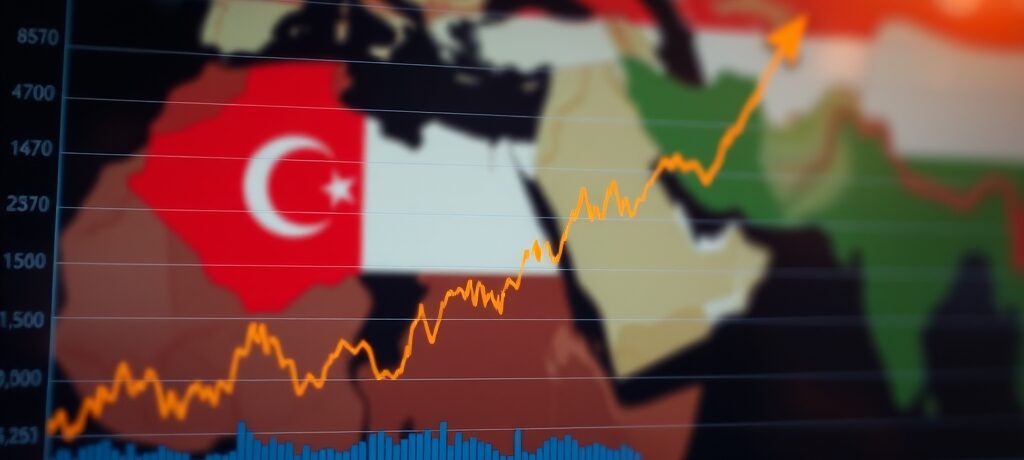
Emerging-market stocks are on track for their most significant weekly gain in nearly six years, driven by investor hopes for a de-escalation of Middle East tensions. This surge comes ahead of crucial US-Iran talks scheduled for this weekend, set against the backdrop of a fragile ceasefire in the region.
On Friday, MSCI’s emerging markets index recorded a 0.9% increase, positioning it for its largest weekly advance since June 2020. Concurrently, a similar benchmark for developing world currencies climbed 0.1%, marking its biggest weekly gain since last May. The positive market sentiment also saw oil prices pare earlier gains as the US-Iran ceasefire discussions in Pakistan approached.
Geopolitical Shifts Drive Investor Confidence
The recent shift in investor behavior is directly linked to the perceived reduction in regional hostilities. Rajeev De Mello, a global macro portfolio manager at Gama Asset Management SA, noted, “The decline in tensions in the Middle East has prompted investors to increase their investments in emerging markets.” De Mello further elaborated on the preceding market caution, stating, “Ahead of Tuesday’s news, investors had significantly reduced or even gone short EM equities,” referring to an earlier deadline set by US President Donald Trump for Iran to agree to a ceasefire deal.
The diplomatic landscape has seen mixed signals. President Trump expressed optimism on Thursday regarding a potential deal with Iran, though he subsequently issued threats concerning fees in the Strait of Hormuz. Adding to the signs of potential de-escalation, Israel’s Prime Minister Benjamin Netanyahu agreed to engage in talks with Lebanon, following a period of aggressive Israeli strikes on the country.
Regional Market Performance and Sector Nuances
Within the emerging markets, South Korea’s Kospi index demonstrated notable outperformance. Chipmakers were among the primary contributors to the index’s rise, signaling strength in the technology manufacturing sector. In contrast, Asian software stocks experienced a decline, as market jitters intensified around potential AI-led disruptions following the release of new models.
Analyst Caution Amidst Uncertainties
Despite the current strengthening of emerging-market assets, analysts maintain a degree of skepticism regarding the sustainability and extent of these gains. Concerns persist over the durability of the Middle East ceasefire and the consistent resumption of energy flows through the region.
Lloyd Chan, a currency strategist at MUFG Bank Ltd., articulated this cautious outlook, writing, “The recent bounce in Asia FX appears largely sentiment-driven and vulnerable to reversal should geopolitical tensions re-escalate or if oil prices stay high for longer.” Chan emphasized that a sustained recovery would necessitate the reopening of the Strait of Hormuz and a persistent decline in global oil prices to solidify market confidence.
The current market rally underscores the profound sensitivity of emerging economies to geopolitical stability. While the prospect of de-escalation has provided a significant boost, the path forward remains contingent on the outcomes of ongoing diplomatic efforts and the enduring stability of the Middle East.