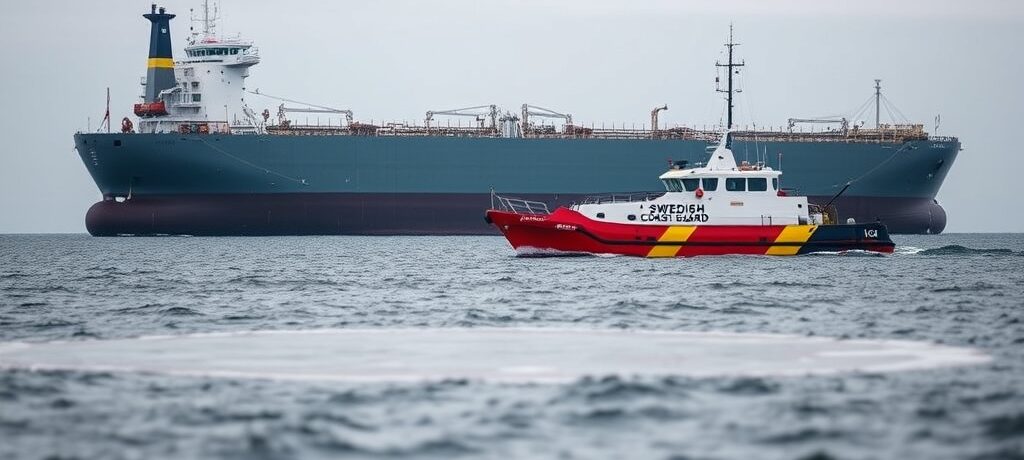
The Swedish Coast Guard has intercepted and boarded the tanker Flora 1, suspected of causing a 12-kilometer (8-mile) oil spill in the Baltic Sea. The vessel is operating under European Union sanctions, targeting the “shadow fleet” engaged in transporting Russian oil, raising concerns about environmental safety and compliance with international trade restrictions.
The incident began early Thursday when the oil spill was detected east of Gotland island. Investigators identified the Flora 1 as the suspected source, leading to the Coast Guard’s boarding early Friday. The tanker, along with its 24-member crew, has been taken to anchorage near Ysted in southern Sweden for further investigation.
Sanctioned Operations and Maritime Surveillance
The Flora 1’s involvement underscores challenges in enforcing international sanctions and maritime safety. The EU had previously sanctioned the vessel, forbidding transactions, due to its role in carrying Russian oil while “practicing irregular and high-risk shipping practices.” These practices include deliberately disabling a vessel’s location system, a tactic often employed to obscure movements and cargo origins.
Daniel Stenling, deputy chief of operations for the Swedish Coast Guard, linked the response to broader security. “We act when we detect emissions. This is a result of our enhanced maritime surveillance that we are conducting as a result of the deteriorating security situation in the Baltic Sea region,” Stenling stated. The immediate cause of the spill remains under investigation.
“Shadow Fleet” Tactics and Compliance Risks
Further scrutiny of the Flora 1 reveals tactics consistent with “shadow fleet” operations designed to circumvent oversight. While the vessel’s current flag and destination were unclear, MarineTraffic data indicated it departed the Russian port of Primorsk, a major oil export terminal, on Tuesday. The Ukrainian government identifies the Flora 1 as owned by a Hong Kong company and affiliated with an Indian company, which it characterizes as “one of the leading operators of the so-called ‘shadow’ fleet involved in the transportation of Russian crude oil.”
A Ukrainian government website tracking sanctions details that the Flora 1 previously carried the flag of Sierra Leone but falsely used Benin. It also notes past instances of the vessel conducting ship-to-ship oil transfers near Greece—a common method for obscuring oil origin—and deliberately turning off its vessel location system. Such practices undermine sanctions and pose significant environmental and safety risks, as evidenced by the Baltic Sea spill.
The detention of the Flora 1 highlights ongoing efforts by European authorities to interdict vessels engaged in illicit or high-risk maritime activities, particularly those linked to sanctioned oil trade. This incident serves as a potent reminder of the environmental and economic vulnerabilities posed by non-compliant shipping operations in critical global waterways, demanding increased vigilance from financial institutions and regulatory bodies.