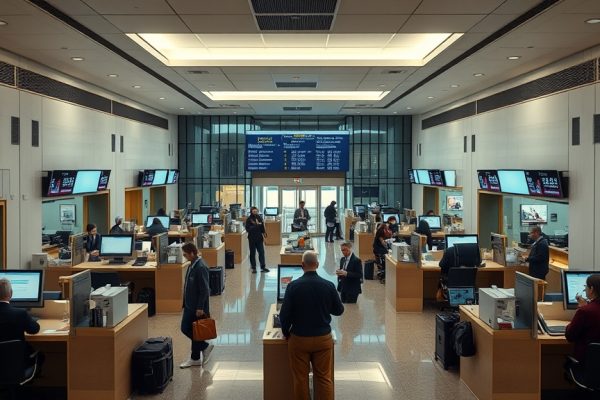
Bank branch closures are experiencing a notable uptick, directly correlated with a surge in merger and acquisition (M&A) activity among financial institutions. This trend, highlighted by a recent report from The Street citing S&P Global data, indicates that bank M&A deals escalated last year and are projected to continue their pace throughout the current year, setting the stage for further consolidation and a reshaping of the physical banking landscape across the United States.
The Merger-Closure Link
The consolidation within the banking sector frequently results in the shuttering of physical locations, a phenomenon particularly pronounced in rural areas. When two banks merge, their branch networks often overlap, creating redundancies that lenders seek to eliminate to reduce operational overhead. As David Danielson, managing director at accounting and advisory firm Wolf & Company, explained to TheStreet, ‘When overlapping branches close to reduce costs, customers who rely on in‑person banking feel that change immediately.’ This immediate impact is especially critical in communities where a physical branch might be the primary, or even sole, point of access for in-person financial services, affecting everything from cash transactions to complex advisory needs.
Recent Closure Data and Broader Trends
Concrete data underscores this accelerating trend in branch closures. According to the Office of the Comptroller of the Currency (OCC), there were 41 bank closure announcements during the first quarter of the current year. This figure compares to 39 announcements in the same three-month period in 2025, as noted in the report, indicating a slight but consistent increase in planned closures. Geographically, Ohio recorded the highest number of planned closures with six, reflecting significant regional adjustments. Texas followed with four closures, while South Dakota, Delaware, Illinois, and Florida each saw three branch closures planned. Additionally, Louisiana, Utah, Wisconsin, and New York each had two closures announced for the period. This pattern aligns with an ongoing industry-wide effort by banks to reduce operational costs amid heightened competition from non-bank entities and digital-only financial institutions. The report, citing Statista data, highlights that between 2015 and 2024, a substantial 15% of all U.S. branch locations were closed, illustrating a decade-long trajectory of physical network contraction.
The Digital Shift and Evolving Consumer Preferences
Further compounding the shift away from physical branches is the evolving landscape of consumer banking preferences, heavily influenced by younger demographics. The demand for digital banking services continues to grow, with research from PYMNTS Intelligence revealing that 13.8% of consumers now utilize a digital bank as their primary financial institution. This preference is particularly strong among Gen Z, who demonstrate a clear inclination towards integrated digital platforms that seamlessly combine financial tasks with shopping, communication, and entertainment. As PYMNTS recently observed, this evolving pattern ‘does not reflect a preference for banks in the traditional sense.’ Instead, it ‘reflects a preference for integrated digital environments where payments, savings and spending sit within the same interface,’ suggesting a fundamental redefinition of what constitutes a ‘bank’ for a significant segment of the population.
Strategic Physical Expansions: A Counter-Narrative
Despite the overarching trend of closures and the accelerating shift to digital, not all financial institutions are reducing their brick-and-mortar footprint. Some major players are pursuing strategic physical expansions, recognizing the continued value of an in-person presence for certain customer segments or market penetration goals. J.P. Morgan Chase, for instance, announced plans earlier this year for a significant expansion, including 160 new branch openings. This initiative forms part of the country’s largest bank’s 2024 commitment to establish over 500 new branches within three years. Similarly, Truist revealed last summer its strategy to open 100 new branches and renovate an additional 300 locations across various U.S. cities, specifically targeting wealthier clientele who may still value personalized, in-person advisory services and a tangible brand presence.
The banking sector is clearly navigating a dual transformation, marked by strategic consolidation driving branch closures on one hand, and a pronounced shift towards digital-first consumer engagement on the other. While the overall trajectory points to a leaner physical presence for many traditional lenders, particularly in areas with overlapping services post-merger, select institutions are simultaneously investing in targeted branch expansions. This bifurcated approach signals a nuanced strategy for customer service and market penetration in an increasingly competitive financial ecosystem, where efficiency gains from consolidation must be balanced against evolving customer demands and the strategic value of a physical footprint.