A prominent Federal Reserve official has signaled that an interest rate hike could become necessary if inflation remains stubbornly above the central bank’s 2% target. This statement represents a notable shift in perspective among some policymakers, moving away from a previous inclination towards reducing borrowing costs, particularly as higher gas prices fuel broader inflation concerns.
Fed’s Shifting Stance on Monetary Policy
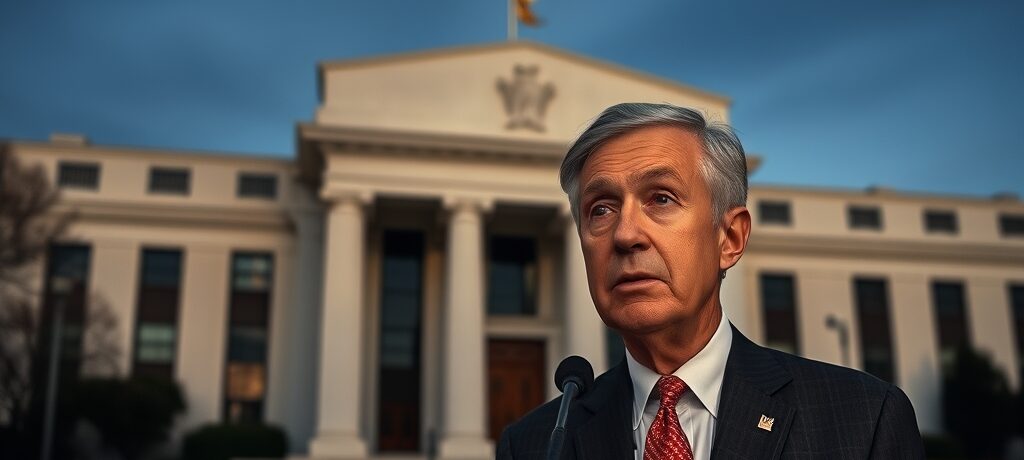
Beth Hammack, president of the Federal Reserve Bank of Cleveland, stated in an interview with The Associated Press on Monday that while her general preference is for the Fed to maintain its benchmark interest rate unchanged ‘for quite some time,’ scenarios exist where a rate adjustment, either up or down, might be warranted. Hammack articulated, ‘I can foresee scenarios where we would need to reduce rates … if the labor market deteriorates significantly. Or I could see where we might need to raise rates if inflation stays persistently above our target.’
This nuanced position underscores a growing apprehension among some Fed officials that inflation, which was already elevated prior to the Iran war, may necessitate further rate increases to bring it under control. Such a move would mark a significant departure from late last year, when the central bank implemented three cuts to its key rate. Rate hikes typically lead to higher borrowing costs for consumers and businesses across various financial products, including mortgages, auto loans, and credit cards.
Hammack is not alone in this evolving outlook. Other Federal Reserve officials, including Austan Goolsbee, president of the Chicago Fed, have also recently acknowledged the possibility of rate hikes. Furthermore, minutes from the Fed’s late January meeting revealed that several of the 19 officials on the rate-setting committee supported modifying the post-meeting statement to include the potential for ‘upward adjustments’ to rates.
Mounting Inflationary Pressures and Economic Forecasts
The prospect of a rate hike is directly tied to recent inflationary trends, exacerbated by geopolitical events. The government is slated to release two key inflation measures this week. On Friday, the March inflation report will provide the first comprehensive look at the impact of the recent surge in gas prices. Economists surveyed by data provider FactSet anticipate that annual inflation will worsen considerably, jumping to 3.1% from 2.4% in February. On a monthly basis, consumer prices are expected to have risen 0.8% in March from February, which would represent the largest increase in nearly four years.
The Commerce Department is also scheduled to report the Fed’s preferred inflation gauge for February on Thursday, though this measure will not yet reflect the effects of the Iran conflict. Looking ahead, Hammack indicated that the Cleveland Fed’s internal estimates project inflation could reach 3.5% in April, a level not seen since 2024. This follows a period where inflation spiked to 9.1% in June 2022 before gradually declining.
Hammack emphasized the persistent challenge, stating, ‘Inflation has been running above our target for more than five years now,’ and a further increase would signify it is ‘moving in the wrong direction, away from our 2% objective.’
Impact of Geopolitical Conflict and Consumer Strain
The ongoing Iran war, which commenced on February 28 and is now in its sixth week, has been a significant driver of recent price increases. Gas prices nationwide averaged $4.12 a gallon on Monday, according to AAA, an increase of 80 cents from just a month prior. Hammack noted that rising gas prices stemming from the conflict are ‘the No. 1 thing’ she hears about from constituents in her district, which encompasses Ohio and parts of Pennsylvania, West Virginia, and Kentucky.
‘We know that causes a lot of pain personally, as it eats up a bigger and bigger share of people’s paychecks. So it’s important for us to stay focused on it,’ Hammack added. The Federal Reserve operates under a dual mandate from Congress: to achieve low inflation and maximum employment. Higher gas prices pose a threat to both objectives, potentially leading consumers to reduce spending elsewhere, which could result in weaker economic growth and job losses. The duration and intensity of the war, and its impact on energy costs, will be critical factors in determining the economic fallout and the Fed’s appropriate response.
Political Repercussions and Forward Outlook
Any decision by the Fed to raise interest rates would almost certainly draw strong criticism from President Donald Trump, who has previously lambasted the central bank for not cutting rates further. Trump has advocated for the central bank’s key rate to be lowered to 1%, significantly below its current level of approximately 3.6%.
As the Federal Reserve navigates this complex economic landscape, balancing its mandates of price stability and maximum employment, the upcoming inflation data and the trajectory of the Iran conflict will be pivotal in shaping its monetary policy decisions. The potential for a rate hike, a stark reversal from recent policy, underscores the seriousness with which some officials view the current inflationary environment and its broader implications for the economy.