Gold prices experienced a significant downturn on Tuesday, extending a slump from the previous day, as investor focus intensified on the precarious state of U.S.-Iran peace talks and the ongoing closure of the Strait of Hormuz. The precious metal’s decline reflects mounting uncertainty surrounding the geopolitical landscape, particularly with a crucial two-week ceasefire deadline set to expire tomorrow, April 22, 2026.
Front Month Comex Gold for June month delivery plummeted by $108.80, representing a 2.25% drop, to settle at $4,720.00 per troy ounce. This sharp decline underscores the market’s sensitivity to the escalating tensions. Silver, another key precious metal, also saw a substantial fall, with Front Month Comex Silver for June month delivery nosediving by $3.752, or 4.67%, to $76.580 per troy ounce. The U.S. Dollar value firmed up concurrently, a factor often associated with lower gold prices, as prospects for peace talks remain clouded until Iran confirms its involvement.
U.S.-Iran Peace Talks on Brink of Collapse
The current two-week ceasefire in the U.S.-Iran conflict, initially announced by U.S. President Donald Trump earlier in April, is poised to conclude tomorrow. Attempts to leverage this ceasefire period for negotiations aimed at establishing a framework for future peace talks have thus far failed to yield any breakthroughs. President Trump himself characterized an earlier meeting as ‘a failure,’ indicating the deep divisions that persist between the two nations.
Adding to the instability, President Trump had previously ordered a blockade on all ships entering or exiting Iranian ports across the Strait of Hormuz, a directive swiftly enforced by the U.S. Navy. Despite this aggressive stance, Trump had subsequently confirmed a second round of peace talks through various media interviews, which provided a temporary ‘breather’ for the markets. However, recent events have severely jeopardized these renewed diplomatic efforts.
On Sunday, U.S. forces seized an Iranian-flagged vessel, citing its failure to heed ‘fair warnings’ to halt. Iran vehemently condemned this action as ‘armed piracy,’ leading Iranian state media to report that the nation was no longer prepared to participate in the next round of peace talks. Iran’s Foreign Minister Abbas Araghchi further escalated the rhetoric by labeling the blockade a violation of the existing ceasefire. As of Tuesday, uncertainty continues to prevail, with no official announcement from Iran regarding its participation in the scheduled discussions.
President Trump, utilizing his Truth Social platform, has accused Iran of numerous ceasefire violations. He also lauded U.S. forces for ‘wiping out Iran’s navy’ and reiterated that the blockade would remain in effect until Iran agrees to a peace proposal. Days prior, Trump had issued a stark warning, threatening that Iran’s power plants and bridges would be ‘obliterated’ if a deal was not signed. He dismissed any reports suggesting he was under pressure to secure an agreement, asserting that the forthcoming deal would ‘guarantee peace, security, and safety for Israel, the Middle East, and the Europe.’
In an interview with CNBC today, President Trump maintained that the U.S. holds the ‘upper hand’ in negotiations and explicitly declined to extend the ceasefire. He again affirmed the imminent arrival of a ‘great deal,’ suggesting it would materialize ‘relatively quickly.’ Iran, however, issued a counter-warning, declaring it would ‘not negotiate under the shadow of threat’ and claimed to possess ‘new cards on the battlefield,’ signaling a potential for renewed military engagement.
Hormuz Strait Closure Intensifies Oil Supply Concerns
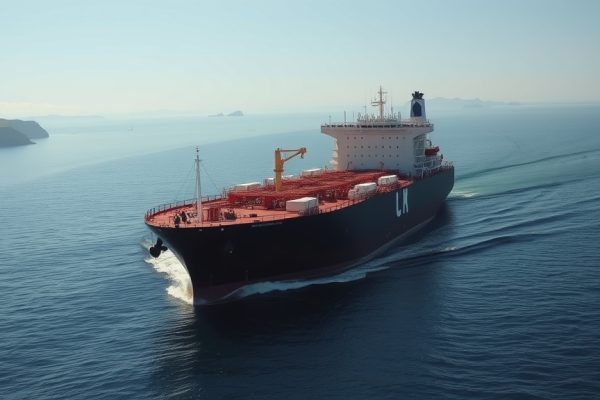
The Strait of Hormuz, a critical global chokepoint for oil shipments, remains shut, exacerbating concerns over global oil supply. The International Maritime Organization has reported that approximately 20,000 seafarers and nearly 2,000 ships have been stranded since the Strait’s closure on February 28, following U.S.-Israeli strikes on Iran. This prolonged closure not only impacts oil flows but also disrupts broader maritime trade, creating significant economic ripple effects.
U.S. Economic Data Provides Mixed Backdrop
Amidst the geopolitical turmoil, recent economic data from the U.S. presented a mixed picture. Automatic Data Processing (ADP) reported that private employers in the U.S. added an average of 54,750 jobs per week over the four weeks ending April 4. Separately, according to the U.S. Census Bureau, retail sales in the U.S. rose sharply by 1.70% in March, surpassing expectations of a 1.40% increase. Retail sales also showed a robust 4.00% increase in March over the same month in the previous year. While these figures suggest underlying strength in the U.S. economy, the ongoing international instability continues to cast a shadow over market sentiment, particularly in safe-haven assets like gold.
The confluence of a rapidly approaching ceasefire deadline, Iran’s refusal to engage in further talks under perceived duress, and the persistent closure of the Strait of Hormuz has created a highly volatile environment for commodities. As the deadline looms, markets will be closely watching for any definitive statements from Tehran regarding its participation in peace efforts, or for further actions that could escalate the already tense situation.