Gold experienced a significant decline, falling as much as 1.9% to below $4,740 an ounce, effectively wiping out the entirety of last week’s gains. This sharp downturn followed reports of vessels coming under fire in the Strait of Hormuz over the weekend, an incident that has reignited fears of energy-supply disruptions and subsequently intensified inflation concerns amidst more than seven weeks of ongoing conflict in the Middle East.
Hormuz Incidents Escalate Tensions
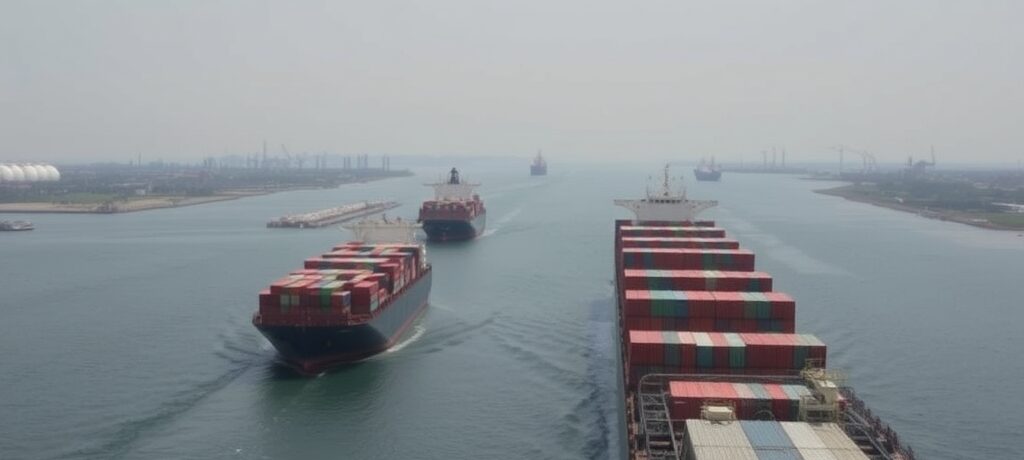
The latest events in the critical Strait of Hormuz have rapidly escalated geopolitical tensions. President Donald Trump confirmed that the US Navy had fired upon and seized an Iranian-flagged cargo ship. In response, Tehran issued a stern warning, stating that any ships approaching the vital waterway would be considered in violation of a ceasefire agreement. These developments unfolded mere hours after the Islamic Republic had declared on Friday that the strait was ‘completely open,’ leading several vessels to abandon their planned crossings.
These incidents have cast a shadow over the prospects for potential peace talks scheduled to take place in Islamabad this week. While President Trump indicated a chance for a deal, he simultaneously renewed threats to target Iranian power plants and bridges. Tehran, for its part, conveyed a pessimistic outlook, stating there was no ‘clear prospect’ for productive negotiations, underscoring the deep divisions and fragility of the current diplomatic landscape.
Broader Market Repercussions
The renewed instability quickly reverberated across global markets. Oil and natural gas prices, which had slumped in the previous session, soared on Monday in response to the heightened risk of supply disruptions. US equity futures slipped, reflecting investor apprehension, while a gauge of the dollar rose as much as 0.3%. This strengthening dollar exerted additional downward pressure on gold, which is priced in the US currency. Kyle Rodda, an analyst at Capital.com, articulated the market sentiment, stating, “The war trades are back on, and that means gold is being sold.” He added, “Things are going to be heavily headline-driven today. That means the potential for two-way volatility,” highlighting the unpredictable nature of current trading conditions.
The protracted conflict has been a primary driver of market volatility in recent weeks, with the latest episode further exposing the precariousness of a ceasefire that is slated to conclude on Tuesday. This ongoing instability has triggered what is described as an unprecedented energy-supply shock, which has, in turn, intensified inflationary pressures globally. For non-yielding assets like bullion, this presents a significant headwind, as central banks become more inclined to maintain steady interest rates or even implement further hikes to combat rising inflation. Gold has already registered a loss of approximately 10% since the conflict commenced at the end of February.
Federal Reserve and Inflation Outlook
Investors are closely monitoring the upcoming US Senate confirmation hearing for Kevin Warsh, President Trump’s nominee to lead the Federal Reserve, scheduled for Tuesday. Warsh’s responses to questions regarding monetary policy will be crucial. Any indication that he might advocate for monetary easing later in the year would likely provide support for bullion. Conversely, a stance emphasizing greater caution around inflation and a reluctance to cut interest rates would be perceived as negative for gold, reinforcing the current headwinds.
Despite the immediate inflationary concerns stemming from the energy shock, some analysts suggest a more nuanced long-term outlook. Lorenzo Portelli, head of cross asset strategy at Amundi, noted that “The inflationary impulse triggered by the energy shock is likely to prove temporary rather than persistent.” He further elaborated that “Core inflation remains more subdued and better contained” compared to the energy crisis experienced in 2022, a factor that could potentially “reduce the need for central banks to pursue an even more hawkish stance.” This perspective offers a glimmer of potential moderation in central bank policy, though it remains contingent on the broader economic and geopolitical landscape.
Current Market Snapshot
As of 8:56 a.m. in Singapore, spot gold was trading down 1.4% at $4,763.66 an ounce. Other precious metals also registered declines, with silver sliding 1.7% to $79.50 an ounce. Platinum and palladium likewise experienced downward movements. The Bloomberg Dollar Spot Index, reflecting the dollar’s strength, was up 0.2%.
The confluence of renewed geopolitical tensions in the Middle East, particularly the incidents in the Strait of Hormuz, and their immediate impact on energy markets continues to shape investor sentiment. While the immediate focus remains on the inflationary pressures and the potential responses from central banks, the broader trajectory of the conflict and the effectiveness of diplomatic efforts will be critical in determining the future direction of safe-haven assets like gold and the stability of global financial markets.