The strategic Strait of Hormuz has become the focal point of a dangerous, months-long standoff between the United States and Iran, a high-stakes endurance game with significant global economic implications. At its core, the conflict is a battle of economic resilience, with Tehran betting its sanctions-hardened economy can withstand the pressure, while Washington grapples with rising oil prices, renewed inflation, and growing recession fears.
A Mutual Blockade in the Waterway
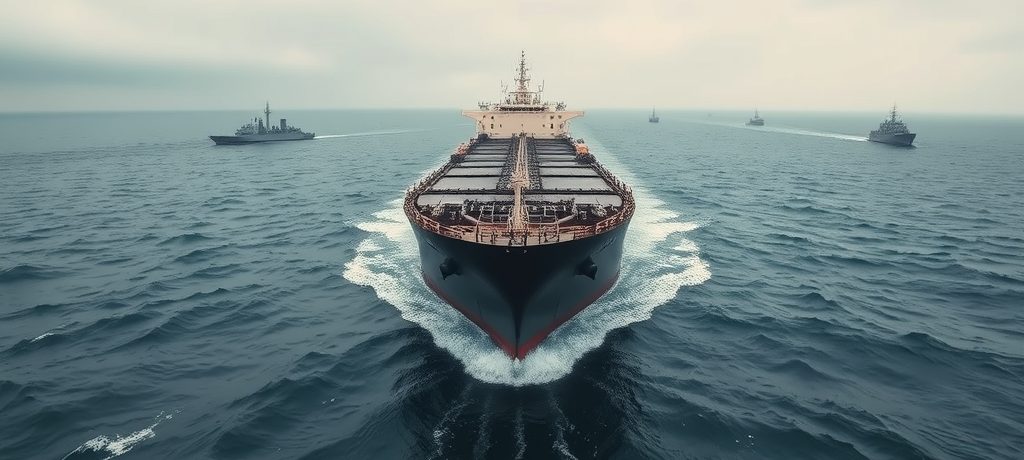
The current crisis, now approaching its fourth month, is characterized by a mutual blockade. Iran has reportedly begun charging ships up to $2 million for safe passage through the strait, a move that violates international maritime law. Simultaneously, the United States has implemented a naval embargo, turning back vessels carrying Iranian oil exports. Despite these measures, neither side has achieved a decisive victory. Some Iranian ships continue to navigate the strait, and several Asian shipping firms have reportedly agreed to pay the imposed tolls.
Fragile negotiations aimed at reopening Hormuz have repeatedly stalled, raising concerns about a potential escalation into a wider regional conflict. Despite mediation efforts, including a Pakistan-led initiative and a proposed memorandum to end hostilities, neither the US nor Iran appears willing to concede ground first.
US Leverage Questioned, Gulf Allies Urge Restraint
Dania Thafer, executive director of the Gulf International Forum (GIF), suggests that former US President Donald Trump’s fluctuating military threats, intended to bolster leverage, may have backfired. “The Iranian response suggests the opposite,” Thafer told DW, indicating that Tehran interprets these threats as a sign of US reluctance to escalate. US President Trump is facing increasing pressure domestically and internationally to avoid further military action, with key Gulf allies like Saudi Arabia, the United Arab Emirates, and Qatar advocating for restraint. The specter of rising oil prices and domestic inflation ahead of the US mid-term elections in November adds further political urgency.
Iran’s Economic Strain and Strategic Ambitions
While Iran may be projecting an image of resilience, its economy is demonstrably suffering. Miad Maleki, senior fellow at the Foundation for Defense of Democracies (FDD), estimated in April that Iran is losing approximately $435 million per day in trade, with oil exports accounting for nearly two-thirds of this figure. With the US blockade in effect for 39 days by Friday, Iran’s public finances have already incurred an estimated $17 billion loss, in addition to roughly $144 billion in economic damage attributed to US-Israeli strikes in the early weeks of the conflict. Burcu Ozcelik, senior research fellow at the Royal United Services Institute (RUSI), argues that while Iran’s missile attacks may have provided “outsized leverage,” the disruption to its own oil exports is inflicting significant damage. “Despite Tehran’s bluster about regime resilience, its economy is not blockade-proof,” Ozcelik stated.
Beyond immediate economic pressures, Iran appears to be leveraging the conflict to pursue long-term regional ambitions. Thafer believes Iran’s goals extend beyond military victory, aiming to “flip the regional order in its favor.” This includes seeking the expulsion of US forces from the region and establishing an Iranian security framework, an objective that runs counter to the interests of Gulf states, despite their current frustrations with Washington.
Gulf States Caught in the Crossfire
The standoff is described by experts as a precarious waiting game, with both the US and Iran believing they have the advantage of time. However, Gulf states are far more exposed economically and risk-averse. Their frustration with the deadlock has translated into coordinated pressure for a diplomatic resolution. These nations have urged President Trump to reconsider further strikes and allow negotiations more time. Privately, they have warned that a prolonged frozen conflict could jeopardize their ambitious plans to diversify their economies away from fossil fuels, which involve hundreds of billions of dollars invested in industrial and tourism projects. They strongly support the Pakistan-mediated talks and a joint US-UN initiative to reopen the Strait without Iranian tolls or control claims.
Washington, while cautiously optimistic about a diplomatic breakthrough, maintains its demands for a complete reopening of the Strait, an end to Iran’s nuclear enrichment activities, and no sanctions relief without substantial concessions. US Secretary of State Marco Rubio has reiterated that military action remains a viable option if Iran fails to compromise. However, Ozcelik points out the difficulty for the US in finding a target that would immediately compel regime surrender, warning that targeting civilian infrastructure could provoke harsher retaliation against Gulf states.
Hardship for Ordinary Iranians
Despite the growing hardship faced by ordinary Iranians, Tehran maintains its resolve. The economic pain is unlikely to abate soon. Ozcelik suggests that Iran’s proposals to extract fees for passage or for undersea cables indicate a pragmatic recognition within Tehran that the nation and its people face a protracted period of economic difficulty, even if sanctions relief were to be achieved. Annual inflation in Iran has surpassed 54%, with some food prices more than doubling. A nationwide internet blackout, lasting over 80 days, has further isolated citizens and disrupted daily life. As Thafer emphasized, while President Trump may view winning this conflict as part of his presidential legacy, for Iranians, it is a matter of “regime survival and the future of their country.”