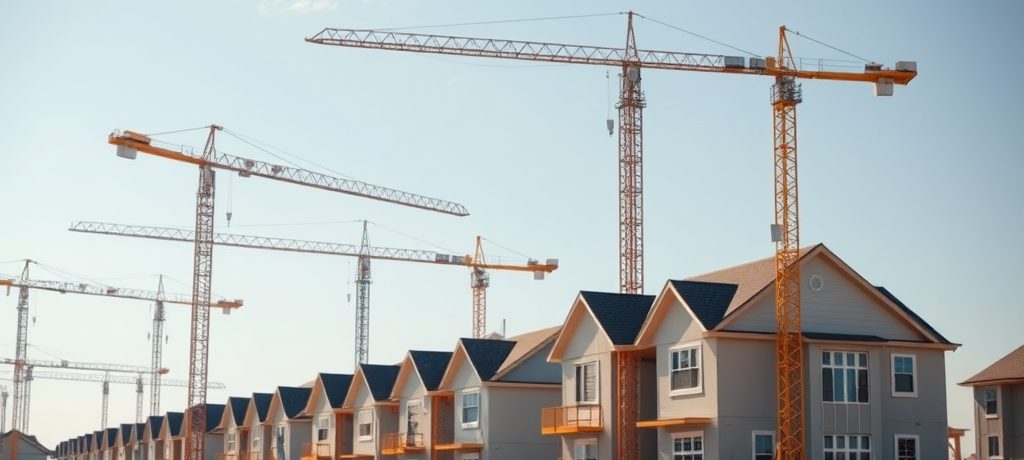
Washington D.C. – In a significant bipartisan move, the House of Representatives on Wednesday passed a comprehensive bill designed to address the nation’s escalating housing affordability crisis. The legislation, which garnered overwhelming support with a 396-to-13 vote, aims to stimulate the construction of new homes and place restrictions on corporate investors purchasing single-family homes for rental purposes.
This amended version of the bill, which previously passed the Senate two months prior, now heads back to the upper chamber for agreement on a unified text before it can be sent to the President. Both political parties are demonstrating a keen interest in legislative action on housing ahead of the midterm elections, a move that underscores the public’s concern over the rising cost of homeownership.
Addressing the Housing Shortage
The core of the housing affordability crisis, according to recent data, is a significant shortage of available homes. This scarcity has driven the average home price to approximately $400,000, placing homeownership out of reach for many Americans. Realtor.com estimates a gap of 4 million housing units between the demand and current supply, highlighting the urgency for increased construction.
If enacted, this legislation would represent the most substantial piece of housing policy in decades. The bill’s provisions are intended to inject more housing units into the market at a faster pace, a strategy that analysts suggest could help alleviate price pressures.
The Corporate Landlord Debate
A central and politically charged element of the bill targets large corporate investors. The House’s version specifically prohibits any entity owning more than 350 single-family homes from acquiring additional properties of this type. These large-scale, often Wall Street-backed, landlords have become a point of contention across the political spectrum.
Concerns have been voiced by lawmakers that these investors are outbidding individual families, leveraging their financial power to purchase homes with all-cash offers and subsequently renting them out. While research on the precise impact of these corporate landlords on home prices is mixed – with some studies indicating price increases and others suggesting rental cost reductions due to increased supply – their growing presence has fueled bipartisan opposition.
Nationally, these institutional investors currently represent about 3% of the single-family rental market. However, their footprint is considerably larger in regions like the Sun Belt and in specific metropolitan areas such as Indianapolis and Seattle. This trend has prompted action, including President Donald Trump’s executive order in January directing federal agencies to cease supporting large institutional investors in their acquisition of single-family homes.
Incentivizing Construction and Streamlining Development
While the bill aims to curb the acquisition of existing homes by large investors, it also seeks to encourage the development of new housing stock. The Senate’s initial version of the bill included a provision that would have required large landlords to sell their ‘build-to-rent’ homes to families after seven years. This particular clause faced significant pushback from the homebuilding industry, with 79 industry groups arguing it would effectively halt the production of build-to-rent housing.
The House’s amended bill removes this seven-year resale requirement, thereby providing a clearer pathway for investors to develop new homes specifically for the rental market. The ‘build-to-rent’ sector has seen substantial growth, now accounting for 7% of all single-family home construction over the past decade, and proponents argue it is crucial for increasing housing supply and lowering overall costs.
Beyond the corporate investor ban, the legislation incorporates a range of provisions aimed at deregulation and streamlining the building process. For instance, factory-built homes will no longer be mandated to have a permanent chassis, a structural component often unnecessary for manufactured homes that are rarely moved. The bill also proposes to expedite environmental reviews for housing projects constructed in underutilized urban spaces and would establish a grant program to help communities develop pre-approved housing design ‘pattern books.’ These pre-approved designs are intended to simplify the permitting process, leading to quicker construction times and, consequently, more affordable housing, as evidenced by cities that have already adopted similar initiatives.
The legislative journey of this bill highlights a shared objective between Democrats and Republicans to demonstrate tangible progress on housing affordability. While the ban on corporate homebuying has garnered significant attention, the bill’s broader scope, encompassing deregulation and construction incentives, reflects a multifaceted approach to a complex issue. As Senator Elizabeth Warren, a co-sponsor of the Senate version, described it, the bill is a “meatball” of various policy ingredients, reflecting a collaborative effort to address the housing dilemma.
With the House’s approval, the bill now returns to the Senate for its consideration. The outcome of this reconciliation process will determine the final shape of what could be a landmark piece of legislation in the ongoing effort to make housing more accessible across the United States.