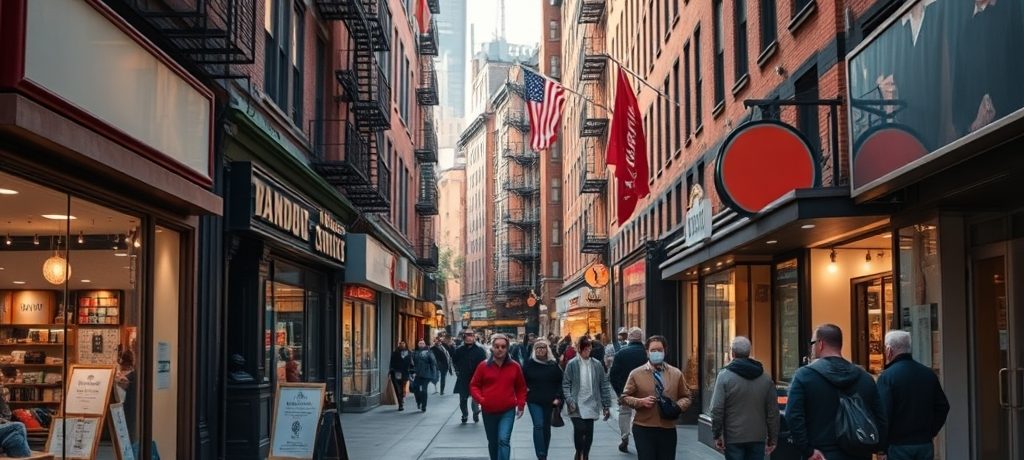
Despite US consumer confidence plummeting to historic lows, a surprising retail sector in New York City is experiencing a sweet surge: candy stores. From established institutions like Economy Candy to new entrants and international brands, these confectionery businesses are expanding their footprint across Manhattan, Brooklyn, and beyond, defying broader economic headwinds. This unexpected growth points to a persistent consumer demand for affordable indulgences, even as households tighten their belts against inflation and uncertainty.
The ‘Lipstick Effect’ in Action
The phenomenon echoes the ‘lipstick effect,’ an economic theory popularized in the early 2000s, suggesting that consumers, unable to afford major luxury purchases, instead opt for smaller, more accessible treats. Kate Bolger, set to open The Village Confectionery in Sleepy Hollow next month, directly attributes candy’s appeal to its low price point, stating, ‘everyone can partake’ despite economic pressures. Bolger, a former movie producer, observes that while ‘consumers may be putting off making big, expensive purchases,’ a piece of candy remains an attainable pleasure. This sentiment is deeply rooted in the history of New York’s oldest sweet shop, Economy Candy. Mitchell Cohen, its third-generation owner on Manhattan’s Lower East Side, explains that his grandfather pivoted the business entirely to candy in 1937, towards the end of the Great Depression. Initially a hat and shoe repair store with candy sold from a cart, the shift occurred because ‘people couldn’t afford to get things repaired,’ Cohen recounts, highlighting candy’s enduring role as an affordable comfort during hardship. Eighty-nine years later, Economy Candy continues to thrive, underscoring the resilience of this niche market.
Strategic Expansion and Niche Markets
The current expansion is not merely organic but also strategically driven, particularly by new players. BonBon, an upmarket candy store company founded in 2018 by three Swedish expats, now operates five shops across Manhattan and Brooklyn, with an additional location in the Hamptons opened last summer. Co-founder Leo Schaltz reveals a deliberate real estate strategy: avoiding high-traffic main avenues like Broadway in favor of side streets. This approach allows for lower rents and facilitates creating a ‘cozy’ atmosphere in smaller units. BonBon further differentiates itself through ‘little, quirky details,’ such as staff uniforms inspired by a Stockholm restaurant, leveraging the rising global popularity of Swedish confectionery, known for its strict natural ingredient rules and social media appeal. The company is also extending its reach beyond NYC, with a branch due to open in Greenwich, Connecticut, this summer. Similarly, another Swedish sweet shop chain, Candy King, established its first US outlet in Manhattan last December, signaling a broader trend of international brands tapping into the American market for affordable luxuries.
Diversification and Operational Advantages
Beyond strategic location and branding, operational efficiencies and diversification are also contributing to the sector’s resilience. Cat Cirino, who launched Candor Candy’s in Brooklyn’s Fort Greene neighborhood in March, has adopted a hybrid model to bolster revenues. Alongside her core candy offerings, Cirino sells pantry items such as granola, rice, soft drinks, and beef jerky, all sourced from independent producers. This diversification helps stabilize income streams. From a product perspective, candy itself offers several inherent advantages for retailers. It boasts a long shelf life and can be stored at room temperature, simplifying inventory management and reducing overheads. Furthermore, the popular pick-and-mix model shifts a significant portion of the labor to the customer, streamlining operations and enhancing the shopping experience.
Headwinds and Enduring Appeal
Despite this growth, the candy sector is not immune to broader economic challenges. Mitchell Cohen of Economy Candy highlights significant increases in wholesale prices, attributing them to former President Trump’s import tariffs and elevated global transport costs, exacerbated by rising fuel prices linked to the US-Israeli conflict with Iran. He notes that a Hershey chocolate bar, which cost his shop approximately 62 cents pre-pandemic, now exceeds a dollar, primarily because cocoa beans are sourced internationally. Cohen also faced supply chain disruptions, with one UK supplier ceasing shipments to the US after incurring substantial losses in customs. However, Cohen emphasizes the sector’s enduring appeal, stating that his shop has absorbed most of these cost increases, and critically, his sales are up. His observation, ‘a little candy goes a long way,’ encapsulates the product’s unique position as an accessible comfort item in economically uncertain times.
The expansion of candy stores across New York City, set against a backdrop of declining consumer confidence, presents a compelling case study in retail resilience. It demonstrates how businesses, by offering affordable luxuries and adapting strategic models, can not only survive but thrive during periods of economic strain. As US retail sales show modest growth but consumer sentiment remains low, the humble sweet treat continues to serve as a small, yet significant, indulgence for many, proving its enduring economic relevance.