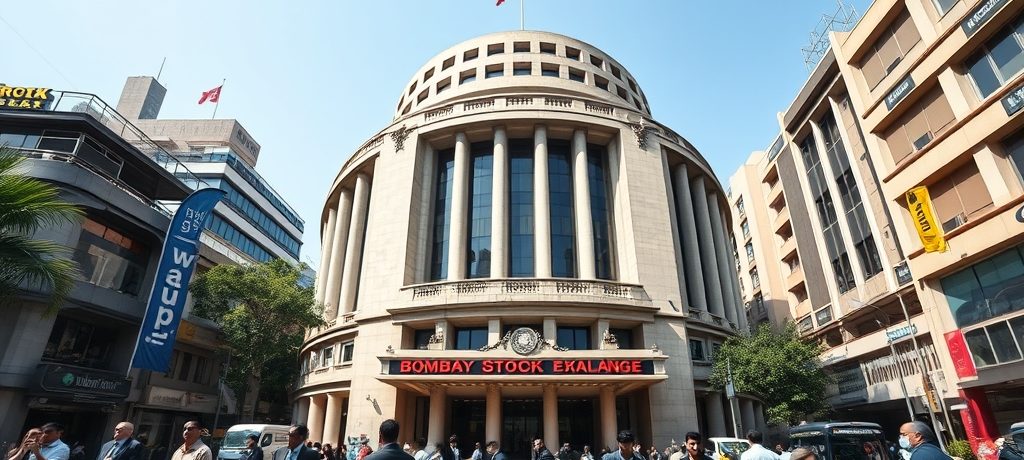
Global investors, after more than a year on the sidelines, are actively re-engaging with India’s markets, signaling a significant shift in sentiment. Major financial institutions like Citigroup, Macquarie Capital Securities, Goldman Sachs Group Inc., and Barclays Plc are noting a distinct revival of interest as oil pressures recede.
Wall Street Re-engages with India
The renewed appetite for Indian assets is evident across Wall Street. Citigroup Inc.’s India team, following meetings with 36 US clients, reported a clear resurgence in investor interest. Macquarie Capital Securities observed a noticeable uptick in customer queries after an extended lull. Goldman Sachs Group Inc. has adopted a more positive outlook, while Barclays Plc suggests it may finally be time to view the world’s fastest-growing major economy as an investment opportunity.
K. Balasubramanian, Citigroup’s India chief executive officer, stated, “The 18-month long negative cycle on India is eclipsing fast.” He added, “Investor sentiment is on the cusp of changing. They are beginning to think about India, with the fiscal deficit narrowing and the rupee coming out of the rout loop.” This marks a notable departure from when India had fallen out of favor.
Fading Oil Pressures Boost Confidence
A primary driver behind this renewed enthusiasm is the significant easing of energy-related concerns. India, as the world’s third-largest crude buyer, was particularly vulnerable to the energy shock triggered by the US-Iran war, which previously stoked worries about its external finances and pushed the rupee to record lows.
However, the landscape has shifted. Brent crude dropped approximately 30% in the June quarter, returning to near pre-war levels. This reduction in oil prices has directly alleviated inflation and fiscal risks, major concerns for investors. Improved macroeconomic stability prompted Citigroup to raise its growth forecast for India, while Goldman Sachs now favors 30-year government bonds, reflecting confidence in the nation’s long-term financial health.
Policy Measures Drive Market Turnaround
Policymakers have played a crucial role in bolstering investor confidence through strategic measures aimed at attracting foreign capital into government debt and shoring up the rupee. These efforts are now visibly impacting market performance.
Recent data underscores this positive trend. Indian equities outperformed emerging-market peers in June by the most in seven months. Global funds purchased a record $4.4 billion of index-eligible government debt, and foreign outflows from stocks were the smallest in four months. Furthermore, the rupee staged a robust recovery, ranking as one of Asia’s strongest-performing currencies last month, reversing its earlier depreciation.
Diversification and Stability Attract Capital
While investors previously chased markets with greater exposure to the artificial intelligence boom, India’s relative lack of AI-linked plays may now present an advantage. As doubts emerge regarding the sustainability of rallies in AI-heavy markets such as South Korea and Taiwan, a rotation back into broader emerging markets is anticipated.
Steven Holden, founder of Copley Fund Research, highlighted this potential shift, noting, “Given the concentration risk sitting in Taiwan and South Korea, it’s hard to imagine active EM managers not rotating back into China and India.” He pointed out that the average portfolio weight among active emerging-market fund managers is currently at its lowest levels in 12 years for China and six years for India, suggesting ample room for reallocation.
Beyond diversification, Indian equities offer a degree of stability not always found in other developing markets. Data from the first six months of 2026 shows the Nifty recorded 38 sessions with moves of 1% or more in either direction. This compares favorably to 59 such sessions for MSCI’s broader emerging-market and Asian gauges, and is markedly lower than South Korea’s Kospi, which experienced 79 such volatile sessions. This lower volatility profile enhances India’s appeal to investors.
The confluence of fading oil pressures, proactive policymaking, improving macroeconomic indicators, and the inherent stability of its markets is positioning India for a significant re-evaluation by global investors. After a period of cautious observation, Wall Street’s renewed interest signals a potential sustained shift in capital flows, underscoring India’s growing appeal as a resilient and diversifying investment destination within the broader emerging markets landscape.