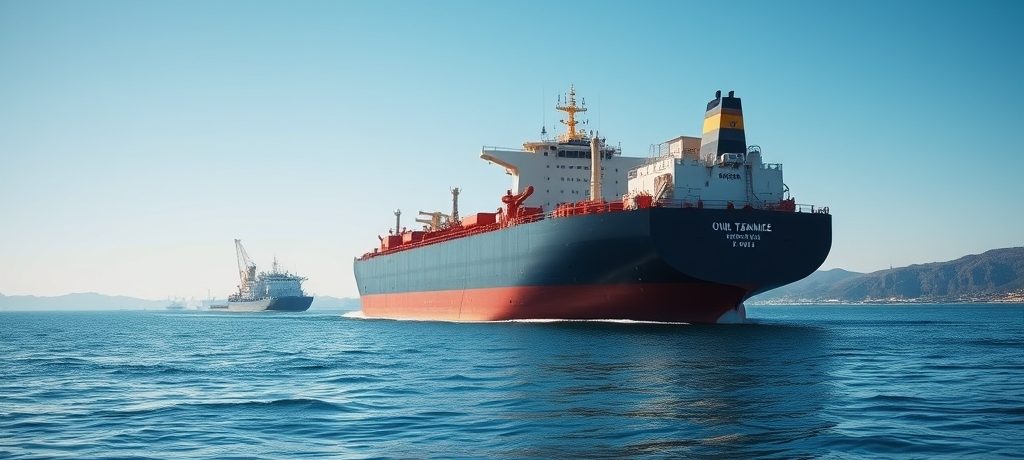
Crude oil prices experienced a significant plunge on Tuesday, extending losses from the previous two sessions, as rising optimism surrounding a potential resolution to the U.S.-Iran conflict eased persistent supply disruption concerns. The de-escalation of tensions in the Middle East has provided a notable shift in market sentiment, directly impacting energy commodity valuations.
Specifically, WTI Crude Oil for September month delivery was last observed trading down by $3.61, representing a 4.37% decline, to settle at $79.00 per barrel. This sharp drop reflects the market’s immediate reaction to diminishing geopolitical risk premiums that have underpinned oil prices in recent weeks.
The de-escalation of Middle East tensions began over the last weekend, following an order from U.S. President Donald Trump to the U.S. military to halt attacks on Iran. This directive marked a crucial turning point after nearly two weeks of intense mutual attacks by both sides, which had largely subsided by last Friday. Yesterday, President Trump admitted that the U.S. and Iran were engaged in talks, expressing optimism that ‘some good outcome could show up.’
Despite President Trump’s optimistic remarks, Iran has denied any ongoing direct negotiations with the U.S. However, Tehran did acknowledge that intermediaries are actively conveying messages from the U.S. to Iran. In a move aimed at fostering stability, Iran has assured that it would refrain from any attacks as long as the U.S. ceases its offensives. Regional diplomatic efforts are also underway, with Oman, Qatar, and Pakistan coordinating their efforts to translate the current pause in attacks into a long-lasting ceasefire.
Market sentiment has remained largely positive, even in the face of these contradictory reports regarding the status of direct talks. This optimism is primarily driven by the concrete action of U.S. forces halting their attacks on Iranian targets for the fourth consecutive night. Consequently, expectations for a permanent settlement to the six-month-old Gulf crisis have notably increased, reducing the perceived threat to oil flows from the region.
Regional Diplomacy and Shipping Lane Management
Further contributing to the easing of supply concerns, Iran’s Foreign Minister Abbas Araghchi held separate telephone conversations yesterday evening with the foreign ministers of Saudi Arabia and Oman. These discussions focused on the latest regional developments and, critically, the management of the Strait of Hormuz, a vital chokepoint for global oil shipments.
Today, Reuters, citing a Gulf source, reported that Oman has put forward a proposal for a joint regional mechanism specifically designed to manage shipping traffic across the Strait of Hormuz. This initiative, which reportedly has Gulf backing, aims to enhance stability and ensure the unimpeded flow of maritime commerce through the strategic waterway.
Emerging Threats to Alternative Routes
While attention has largely focused on the Strait of Hormuz, new concerns have emerged regarding alternative shipping lanes. Recently, the Iran-backed Houthi militants in Yemen announced a naval blockade on Saudi Arabian vessels operating in the southern Red Sea and the Bab el-Mandeb Strait. This development is particularly significant as, after Houthis attacked two Saudi Arabian oil tankers transiting the Red Sea, operators have been diverting tankers to the Suez Canal in Egypt to circumvent the Bab el-Mandeb Strait.
Currently, with prevailing concerns of aerial attacks across the Strait of Hormuz, tankers have increasingly utilized the Bab el-Mandeb sea-route as an alternative. The Houthi militants now intend to disrupt this crucial corridor, through which nearly 12% of global commerce passes. This presents a new layer of complexity to regional shipping security, potentially shifting disruption risks rather than eliminating them entirely.
OPEC’s Production Outlook
In parallel with the geopolitical developments, the Organization of Petroleum Exporting Countries (OPEC) is also poised to make decisions impacting global supply. Last Friday, Reuters reported that in its upcoming meeting on August 2, OPEC is likely to announce a further hike in oil output targets from September by approximately 188,000 barrels per day. This increase would match the same quotas instituted for June, July, and August.
However, today, Reuters further reported that the producers’ group is expected to pause these oil-production quota hikes after a final increase in September. It is important to note that due to the Middle East war and the previous disruption across the Strait of Hormuz sea-route, member-nations of OPEC had instituted large cuts to their output and export volumes, making these recent and anticipated hikes largely symbolic in the context of overall capacity.
In broader market movements, the U.S. dollar index was last seen trading at 101.38, registering a slight decrease of 0.14, or 0.14%, today. The confluence of de-escalating regional tensions, diplomatic initiatives, and evolving threats to shipping lanes continues to shape the volatile landscape of the global crude oil market, with traders closely monitoring every development for its potential impact on supply and demand dynamics.