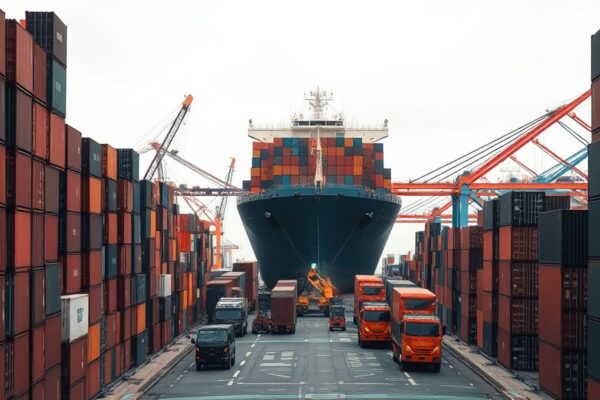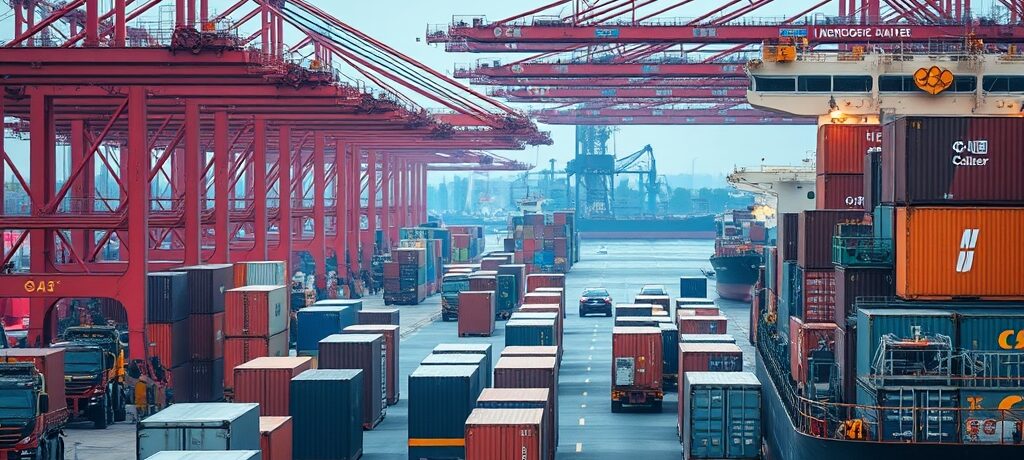
Effective Friday, China has implemented a sweeping policy granting tariff-free access to its market for imports from 53 of Africa’s 54 nations, a move that starkly contrasts with the United States’ recent push for protectionist import taxes under President Donald Trump. The new policy, set to last for the next two years, extends tariff exemptions to Africa’s 20 largest economies, including significant players such as South Africa, Egypt, Nigeria, Algeria, and Kenya.
Expanded Market Access for African Economies
This latest initiative builds upon China’s existing framework, which had already dropped tariffs on goods from 33 poorer African countries. With the inclusion of the continent’s major economies, virtually all African nations are now eligible for “tariff-free treatment” for their exports to China, according to official Chinese statements. The sole exception is the small nation of Eswatini, which maintains formal diplomatic ties with Taiwan, a stance that precludes its participation in the agreement.
The Customs Tariff Commission of the State Council in China articulated that the agreement is designed to “promote the common development of China and Africa.” The immediate impact was evident with the first shipment under the new zero-tariff policy: 24 metric tons of apples from South Africa successfully cleared customs in Shenzhen in the early hours of Friday, as reported by China’s official Xinhua News Agency.
Targeted Benefits for Key African Products
China’s Commerce Ministry, as cited by Xinhua, anticipates that the policy will particularly benefit specific agricultural and food products from Africa that previously faced substantial import duties. These include cocoa from Ivory Coast and Ghana, coffee and avocados from Kenya, and citrus fruits and wine from South Africa. Historically, these products were subject to tariffs ranging between 8% and 30%, making the new zero-tariff status a significant advantage.
The targeted products represent considerable export strengths for African nations. Ivory Coast and Ghana collectively account for over 50% of the world’s cocoa supply, while South Africa is a major global exporter of citrus fruits. The removal of tariffs is expected to enhance the competitiveness of these goods in the vast Chinese market, potentially boosting export volumes and revenues for the respective African economies.
South African Trade Minister Parks Tau, during bilateral talks in China in February, expressed optimism regarding the collaboration, stating that “South Africa looks forward to working with China in a friendly, pragmatic and flexible manner.” This sentiment reflects a broader trend among several of Africa’s top economies, which had begun seeking new markets for their U.S.-bound products after the Trump administration imposed reciprocal tariffs a year prior, with rates reaching 30% for South Africa and over 40% for some other African countries.
Geopolitical Dynamics and Trade Imbalance
The timing of China’s tariff reduction is notable, occurring as the United States navigates its own protectionist trade policies. While the U.S. Supreme Court struck down President Trump’s far-reaching global tariffs as unconstitutional in February, the administration promptly introduced temporary import taxes to replace them, signaling a continued commitment to its “America First” trade agenda.
China already holds the position of Africa’s largest trade partner. The continent, home to 1.5 billion people, is projected by the United Nations to nearly double its population to 2.5 billion by 2050, at which point it would comprise more than a quarter of the global populace. This demographic trajectory underscores Africa’s growing economic significance and its increasing importance as a market and source of resources.
Despite China’s rhetoric of promoting “common development,” the trade relationship between China and Africa is characterized by a significant imbalance. In 2025, China-Africa trade reached a record $348 billion. However, China’s exports to Africa surged by approximately 25% to $225 billion, while its imports from Africa increased by only around 5% to $123 billion. This disparity has resulted in a widening trade deficit for African nations, a trend exacerbated by the continent’s substantial debt repayments owed to Beijing.
Expert Perspectives on Strategic Intent
Thierry Pairault, a China-Africa expert at France’s National Center for Scientific Research, offered a nuanced perspective on the new policy. He noted that while the agreement might offer some benefits for agricultural products, most of Africa’s primary raw material exports, such as oil and minerals, already enjoyed tariff-free access to China. Pairault suggested that the move serves a broader strategic purpose for Beijing.
“Xi Jinping is positioning China as the antithesis of Western protectionism,” Pairault wrote in an assessment published by the China Global South Project. He added that “This gesture is intended to appeal to both African public opinion and global markets,” implying a diplomatic and reputational objective. However, Pairault also posited that the policy “only applies where it costs (China) almost nothing,” indicating a pragmatic approach where the economic impact on China’s domestic industries is minimal.
The implementation of China’s extensive tariff-free policy for African imports represents a significant development in global trade relations, particularly against a backdrop of increasing protectionism elsewhere. While framed as a measure for common development and offering tangible benefits for specific African agricultural exports, the initiative also highlights the complex economic dynamics and strategic considerations that underpin China’s deepening engagement with the African continent.