The landscape of retail loyalty programs is undergoing a fundamental transformation, driven by evolving consumer financial behaviors and the emergence of flexible payment credentials. As loyalty chiefs at national retailers grapple with questions of points, discounts, and store card offers, the underlying challenge is clear: the modern shopper’s allegiance is increasingly to budget management and convenience across a diverse array of brands, rather than singular brand attachment. This pressure on retail rewards programs, particularly noticeable in 2026, signals a departure from the old co-brand playbook that relied on frequent in-store visits and steady brand loyalty.
The Shift from Brand Attachment to Financial Flexibility
Today’s consumer builds a life around a mosaic of brands and payment methods. They might purchase skincare from an Instagram label, sneakers from Nike, household essentials from Amazon, and a last-minute gift via a Buy Now, Pay Later (BNPL) app. Their loyalty, as Todd Pollak, Chief Revenue Officer at Marqeta, articulates, is to “whatever helps her stay on budget and still get what she needs.” This reality demands that retailer loyalty initiatives integrate into how individuals manage their finances across their entire lives, extending far beyond the confines of a single storefront.
Pollak argues that the traditional co-brand model is giving way to a universal spend incentive. This new model is powered by a payment credential capable of seamlessly moving between debit, installment plans, and other funding options, all while directing rewards back to a specific brand. This is where flexible credentials become pivotal.
Flexible Credentials: The Next Evolution of Co-Brand
The rise of flexible credentials is intrinsically linked to the boom in BNPL services. Consumers have always sought ways to purchase items immediately and spread out payments. The innovation, Pollak notes, lies in the delivery: BNPL providers developed rapid underwriting systems that assess purchases in real-time, offering shoppers immediate clarity on their affordability. These tools have quickly become a standard method for managing cash flow.
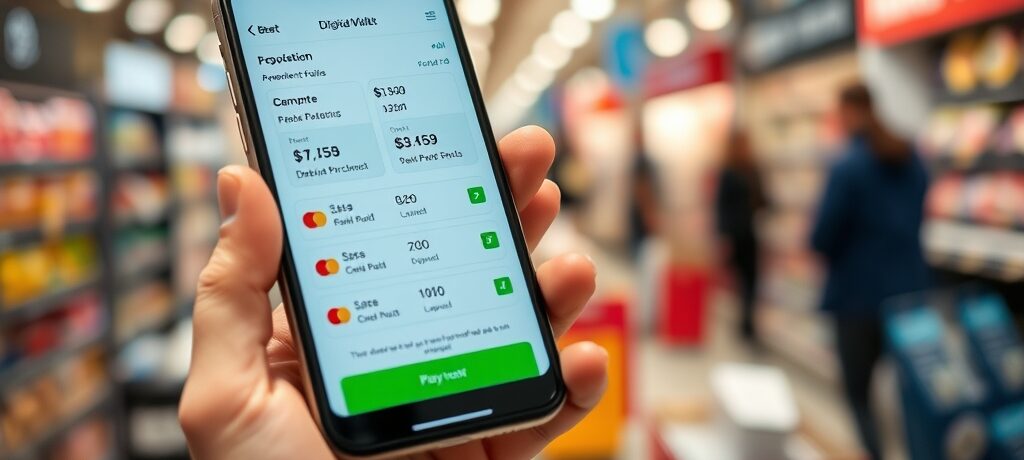
Marqeta stands at the forefront of this evolution, being the first issuer processor certified for Visa Flexible Credential (VFC), with VFC cards already launched for Affirm and Klarna. The company also supports Mastercard One. Pollak envisions flexible credentials as the foundational tool for constructing the “next version of a co-brand credit card.” He observes that many cards linked to debit and installment options are increasingly utilized as comprehensive financial management tools. Retailers adhering strictly to the outdated store-card model risk diminishing relevance if their offerings do not align with consumers’ established flexible spending habits. The more compelling proposition, he suggests, is a single credential usable anywhere, which still accrues value that draws the consumer back to the issuing brand.
Unlocking Retailer Advantages: Purchasing Power and Deeper Insights
For retailers, the adoption of flexible credentials opens two significant avenues for growth and understanding:
- Higher Purchasing Power: By providing accessible financing options, retailers enable shoppers to make purchases sooner, increase shopping frequency, and expand their basket sizes. This direct impact on transaction volume and value is a clear benefit.
- Better Insight: Perhaps even more transformative is the enhanced data visibility. Pollak highlights the strategic advantage: “Now I can see your shopping behavior outside the walls of my business. And now I can start to think more holistically about wallet share and how you actually behave as a consumer.” This broader view allows merchants to identify missed categories and craft more precise, personalized offers, moving beyond mere transactional data to understand comprehensive consumer spending patterns.
Consumers, in turn, gain greater financial flexibility, more budgetary room, and rewards programs that genuinely resonate with their lifestyle and spending habits.
Expanding the Loyalty Funnel, Not Replacing It
While strong retailers with high purchase frequency continue to benefit from traditional co-brand models, Pollak believes the larger opportunity lies in widening the customer acquisition funnel. Legacy co-brand programs frequently reject a substantial number of applicants due to stringent revolving credit standards. Historically, merchants have had limited fallback options, with branded debit products often failing to address the core consumer need for credit-like flexibility. A flexible credential, however, can bridge this gap.
Pollak anticipates that successful retailers will integrate these products as an extension of their existing co-brand strategy, rather than a direct replacement. This allows them to continue offering classic credit cards to qualified shoppers while presenting a flexible, installment-based alternative to those who might not meet traditional underwriting criteria. This dual approach extends buying power to a segment of consumers who desire credit-like flexibility and are already familiar with BNPL concepts, aligning with prevalent consumer behavior.
The strategic decision for merchants then becomes one of practical implementation: whether to build these capabilities in-house or partner with specialized providers. Pollak emphasizes that merchants retain the opportunity to “own the relationship, the offers and the loyalty experience.” For any executive contemplating this new reality, he offers a straightforward test: “If you are a merchant today, consider reviewing your own conversion data and see what percentage of your purchases are a BNPL loan. And I think you will find, there is your business case for the next iteration of a co-brand card.” This data-driven approach underscores the immediate and tangible business imperative for embracing flexible credentials in the evolving retail loyalty landscape.