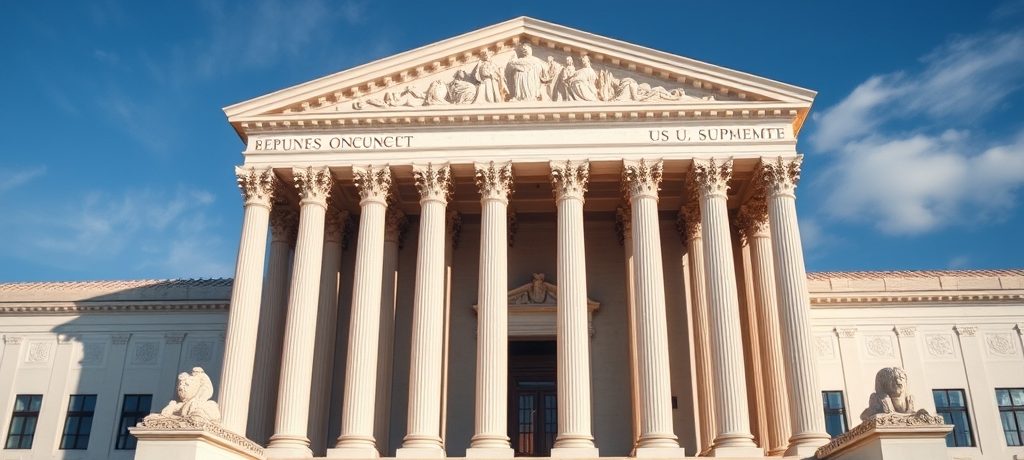
The US Supreme Court has decisively blocked President Donald Trump’s attempt to remove Federal Reserve Governor Lisa Cook, in a 5-4 ruling that strongly reaffirms the central bank’s independence. The nation’s highest court determined that the Trump administration failed to provide Governor Cook sufficient “due process” to contest her dismissal, sending the contentious matter back to lower courts for further proceedings.
This pivotal decision requires the administration to substantiate its allegations of mortgage fraud against Cook in a lower judicial setting. Governor Cook has vehemently denied these accusations, which proponents of the Federal Reserve argue are a mere pretext for President Trump to exert greater control over the institution. The legal framework mandates that a president can only remove governors of the Federal Reserve “for cause,” a provision specifically designed to insulate the bank from political interference and ensure its focus on long-term economic stability over short-term political gains, rather than short-term interests.
Arguments Before the Court
During arguments presented to the Supreme Court in January, Paul Clement, legal counsel for Governor Cook, contended that the administration’s approach to the firing would render Congress’s intended protections for the Federal Reserve “kind of a joke.” President Trump initially announced his intention to remove Cook via social media in August, citing claims that she had submitted mortgage forms declaring two different principal residences concurrently. Banks typically offer lower interest rates for primary homes, making such claims potentially advantageous.
Conversely, Solicitor General John Sauer, representing the White House, argued before the court that the social media announcement provided adequate notice and an opportunity for Cook to respond. Sauer characterized the alleged issue, even if unintentional, as “negligence” that could erode public confidence in the Federal Reserve. He further asserted that courts should defer to the president’s judgment when determining sufficient cause for removal, emphasizing the executive’s prerogative in such matters and the potential impact on public trust.
Upholding Central Bank Independence
The Supreme Court’s ruling, delivered on June 29, 2026, underscores the critical importance of the Federal Reserve’s autonomy in shaping monetary policy. By insisting on proper due process and upholding the “for cause” standard, the court has reinforced the institutional safeguards designed to shield the Fed from partisan pressures and ensure its ability to set policy to serve long-term economic goals. This requirement was specifically intended to prevent presidents from removing governors simply for disagreeing with their economic agenda or for political expediency.
The battle over Governor Cook’s tenure now returns to the lower courts, where the administration faces the challenge of proving its allegations, and Cook will have a formal opportunity to mount her defense against the claims. This ongoing legal dispute highlights the enduring tension between executive power and the independence of key economic institutions, with significant implications for the future governance and credibility of the US central bank and its ability to maintain stability in financial markets.