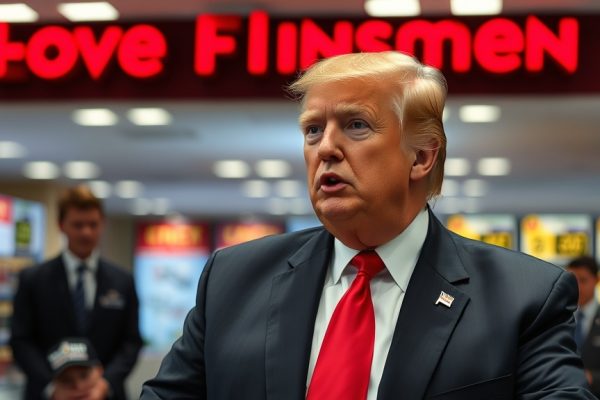
U.S. President Donald Trump has issued an expletive-filled threat against Iran, demanding the immediate opening of the strategically vital Strait of Hormuz by a Tuesday deadline. The ultimatum, delivered on Sunday, follows the dramatic rescue of a wounded U.S. aviator whose F-15E Strike Eagle was downed behind enemy lines, intensifying a conflict that has already claimed thousands of lives and spiked global fuel prices over five weeks.
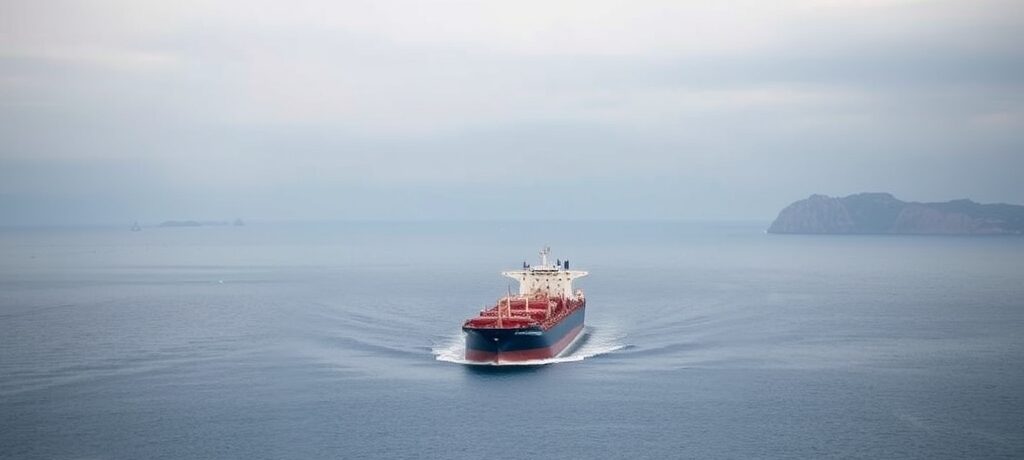
The Strait of Hormuz, a critical chokepoint for global shipments of oil, gas, and humanitarian supplies from the Persian Gulf, has been a central point of contention. Trump, vowing on social media to hit Iran’s power plants and bridges, declared the country would be “living in Hell” if the strait remains closed. This aggressive stance comes as some ships have reportedly paid Iran for passage, highlighting the economic leverage Tehran seeks to exert.
Economic Chokepoints and Escalating Threats
The President’s deadline underscores alarm over Iran’s increasing grip on the Strait of Hormuz. An Iranian presidential spokesperson, Seyyed Mohammad Mehdi Tabatabaei, stated on social media that the strait could reopen only if transit revenues compensate Iran for war damages. Further escalating the economic stakes, a top Iranian adviser, Ali Akbar Velayati, warned that Tehran could also disrupt trade on the Bab el-Mandeb, another key chokepoint to and from the Red Sea.
The conflict has seen both sides threaten and execute strikes on civilian infrastructure. Iran’s U.N. mission labeled Trump’s threat as “clear evidence of intent to commit war crime,” while legal scholars note that attacking civilian infrastructure is permissible only if the military advantage significantly outweighs civilian harm, a high bar to clear. Causing excessive suffering to civilians, they warn, can constitute a war crime.
Infrastructure Under Fire: A Regional Economic Toll
The economic impact of these strikes is becoming increasingly evident across the region. In the United Arab Emirates, authorities reported one Nepali and three Pakistanis injured in fires caused by debris from the interception of an Iranian projectile at Khor Fakkan port. Interception debris also caused fires at a petrochemical plant in Ruwais, halting operations.
Kuwait experienced significant damage from Iranian drone attacks, which put power plants and a petrochemical plant out of service and disabled a water desalination station, according to the Ministry of Electricity. In Bahrain, a drone attack ignited fires at a national oil company storage facility and a state-run petrochemical plant. These incidents underscore the vulnerability of critical energy and water infrastructure to the ongoing hostilities.
Within Iran, airstrikes early Monday struck a residential building near Eslamshar, southwest of Tehran, killing at least 13 people. Airstrikes also damaged buildings at the Sharif University of Technology in Tehran and a natural gas distribution site next to the campus. Another strike killed at least five people in a residential area of Qom, a Shiite seminary city. Neither Israel nor the United States claimed responsibility for these specific Monday strikes.
Human Cost and Market Volatility
Beyond the immediate infrastructure damage, the human cost of the conflict has been staggering, contributing to broader economic instability. More than 1,900 people have been killed in Iran since the war began on February 28. In Lebanon, an Israeli strike killed four people in Beirut, bringing the total casualties there to over 1,400, with more than 1 million people displaced. Eleven Israeli soldiers have died targeting Iranian-backed Hezbollah militants. Gulf Arab states and the occupied West Bank have reported over two dozen deaths, while 19 have died in Israel and 13 U.S. service members have been killed.
The war, now in its fifth week, has shaken global markets and directly contributed to spiked fuel prices, reflecting the deep uncertainty surrounding energy supplies and regional stability. The constant threat to vital shipping lanes like the Strait of Hormuz directly impacts the cost and reliability of global trade, affecting everything from oil and gas to humanitarian aid.
Diplomatic Efforts Amidst Contradictory Positions
Despite the escalating rhetoric and military actions, diplomatic efforts continue. Oman’s Foreign Ministry reported meetings between deputy foreign ministers and experts from Iran and Oman to discuss proposals for ensuring “smooth transit” through the Strait of Hormuz. Egypt’s Foreign Minister Badr Abdelatty has engaged with U.S. envoy Steve Witkoff, Iranian Foreign Minister Abbas Araghchi, and Turkish and Pakistani counterparts. Russia also confirmed a conversation between Araghchi and Russian Foreign Minister Sergey Lavrov. Bahrain has urged the U.N. Security Council to consider its draft proposal authorizing defensive action to ensure safe passage through the strait.
However, the path to de-escalation remains fraught with challenges. Iranian Culture Minister Sayed Reza Salihi-Amiri observed that “It seems Trump has become a phenomenon that neither Iranians nor Americans are able to fully analyze,” noting that the U.S. president “constantly shifts between contradictory positions.” This perceived unpredictability adds another layer of complexity for markets attempting to price in the geopolitical risks.
As President Trump’s Tuesday deadline for the Strait of Hormuz approaches, the global economy watches with bated breath. The combination of direct threats to critical infrastructure, the ongoing human toll, and the volatile nature of the conflict ensures continued market instability, particularly within the energy sector, until a resolution or further escalation materializes.