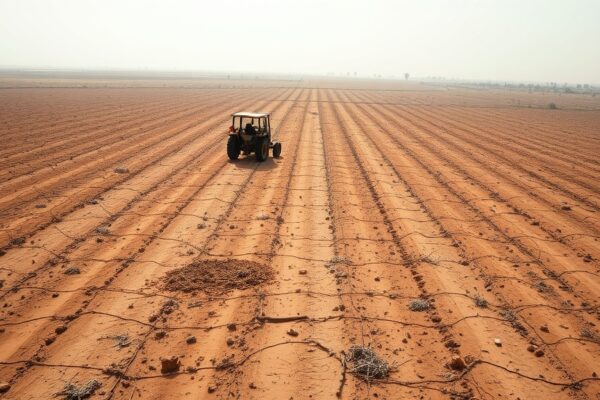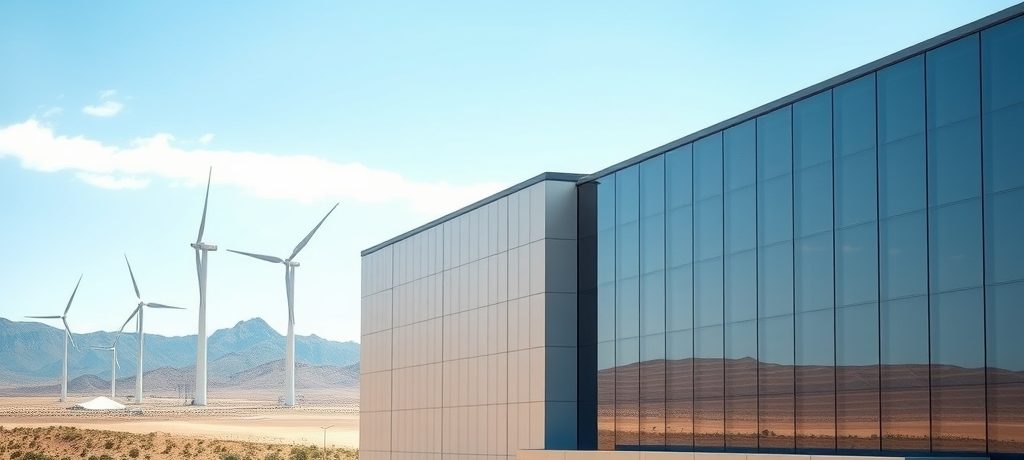
Ulanqab, a city in north China’s Inner Mongolia Autonomous Region, traditionally recognized as China’s “potato capital” and “oat capital,” is rapidly redefining its economic identity. The city is strategically leveraging its abundant wind and solar resources to power a burgeoning computing industry, transforming its natural advantages into new drivers of economic growth. This ambitious shift is central to China’s national “East Data, West Computing” project and has seen Ulanqab unveil a three-year development strategy to become a “token city” by late 2025, fueled entirely by green energy.
From Agricultural Roots to Digital Hub
Since the launch of China’s national “East Data, West Computing” project in 2022, Ulanqab has significantly accelerated its computing infrastructure development. This initiative aims to establish a coordinated national computing network, directing data processing demands from eastern China to western regions, thereby optimizing data center distribution and fostering regional development. Inner Mongolia, where Ulanqab is located, stands as one of the eight national computing hubs under this strategic plan. The city’s transition is evident in its impressive growth metrics: official data reveals that Ulanqab had signed 109 computing center projects as of August 2026. This expansion has translated into substantial financial gains, with the industry generating 5.68 billion yuan (approximately $849 million) in revenue from January to August 2026, marking a robust 40.3% year-on-year increase.
Presidential Endorsement and Strategic Advantages
The strategic importance of Ulanqab’s transformation was underscored by Chinese President Xi Jinping’s visit on Friday, where he called for enhanced utilization of the region’s vast wind and solar resources to develop the green computing power industry. During his inspection of the Chahar High-Tech Development Zone, President Xi emphasized the necessity of ensuring efficient operation of completed projects and timely completion of follow-up initiatives.
He also called for efforts to earnestly implement the requirements for efficient, green, and safe development and actively promote the development of the green computing power industry. Ulanqab possesses unique natural advantages that make it an ideal location for data centers. Its average annual temperature of 4.3 degrees Celsius allows for natural cooling of data centers for nearly 10 months of the year, significantly reducing energy consumption. Coupled with abundant wind and solar resources and relatively low infrastructure costs, these factors have attracted leading big data companies to establish computing centers in the city within a few years. John Gong, a professor of economics at the University of International Business and Economics, highlighted to CGTN that Ulanqab has “made effective use of its abundant renewable energy resources to power China’s AI development.” Gong further noted that President Xi’s visit “underscored his support for Ulanqab’s development model, which leverages local resource advantages to drive economic growth as well as technological innovation.”
Balancing Progress with Preservation
Beyond economic and technological advancement, Ulanqab’s development model places a strong emphasis on ecological conservation. President Xi Jinping also visited the Huangqihai Lake nature reserve on Friday, where he observed local ecological conservation efforts, inspected the lake’s shoreline and mudflats, and noted the diverse birdlife. He reiterated the critical need to fully implement China’s wetland protection law, uphold ecological red lines, and safeguard biodiversity. For degraded wetland ecosystems, President Xi advocated prioritizing natural restoration, supplemented by scientific human intervention.
The Huangqihai Lake, once an inland, closed-basin lake that faced the threat of drying up due to climatic and other factors, serves as a testament to successful conservation. A county-level nature reserve was established in 1993 to initiate wetland restoration, subsequently upgraded to an autonomous-region-level reserve in 2003. Years of dedicated ecological conservation and restoration efforts have led to a significant recovery of the lake’s waters and surrounding vegetation, transforming it into a thriving habitat for wildlife.
Ulanqab’s journey from a traditional agricultural hub to a green computing powerhouse, meticulously balancing technological innovation with environmental stewardship, offers a compelling case study. By strategically converting its local resource advantages into new engines of growth while rigorously protecting its natural environment, the city exemplifies how green development is becoming deeply integrated into China’s broader pursuit of high-quality economic expansion. This model suggests a sustainable blueprint for other regions seeking to modernize their economies without compromising ecological integrity.